Reviewed · EDINBURGH TOURS
Distill a Bottle of Rum on mini copper stills
The best part of this Edinburgh outing is that you do not simply taste rum, you make a bottle of your own. In a cosy micro-distillery room below the Cumberland Bar, you choose up to 10 botanicals, run your recipe through an individual mini copper still, and leave with 500ml of custom rum.
I like the tiny group size, capped at three, because Gary or Neil can answer beginner questions without rushing anyone. I also like the full keepsake at the end: your rum is measured, bottled, labelled, named, and finished with a wax seal.
The main thing to consider is the three-hour length and the alcohol involved. This is a slow, hands-on class rather than a quick tasting, so it suits people who want to spend an afternoon learning and sampling.
In This Review
- Key points at a glance
- Making rum in a basement room beneath an Edinburgh pub
- Three rum samples before you build your recipe
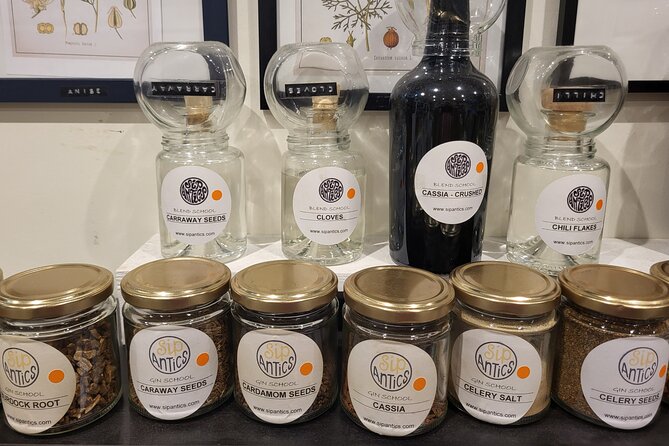
- Choosing up to 10 botanicals for a custom flavour
- Working with an individual mini copper still
- Tasting the new rum and finishing the bottle
- What the three-hour format really gives you
- Is $123.40 good value?
- Who will enjoy Sip Antics most?
- Practical tips for making the most of the class
- Should you book this rum-making class?
- FAQ
- Where does the rum-making class begin?
- What time does the class start?
- How long does the experience last?
- How much rum do I take home?
- How many people can join the class?
- Can I cancel for a full refund?
Key points at a glance
- Choose up to 10 botanicals: Build a personal recipe from fruits, herbs, spices, and other available ingredients.
- Use your own mini copper still: Each person distils a 500ml bottle rather than watching a demonstration from the side.
- Taste before you create: Three rum samples help you understand different styles and flavour profiles.
- Small group format: The official maximum is three people, giving the session a personal feel.
- Hosted by Gary or Neil: Both hosts are described as friendly, relaxed, and highly experienced with rum, gin, and flavour combinations.
- Leave with a finished bottle: Name, label, bottle, and wax-seal your custom rum before taking it home.
Making rum in a basement room beneath an Edinburgh pub
Sip Antics begins at The Cumberland Bar, at 1 to 3 Cumberland Street in Edinburgh. The distilling room is described as a cosy, old-fashioned basement space, which gives the class a more personal feel than a large commercial distillery tour.
You meet at noon and return to the same place at the end. The location is near public transport, but the supplied details do not specify the best bus route or walking time from central sights, so allow a little time to find the Cumberland Bar before the start.
On arrival, you receive a rum and mixer while the host explains how the afternoon will work. That opening drink matters. It gives you time to settle in, meet the other people in your small group, and get comfortable before the tasting and recipe work begin.
The setting also helps the class feel social without becoming a loud pub crawl. You are in a working room with a host, ingredients, stills, and a few other people. If you like asking questions, smelling ingredients, and comparing ideas, you should feel at home here.
Other Edinburgh days people book alongside this one:
- The World Famous Underground Ghost Tour
★ 4.5 · 9,272 reviews - Underground Vaults Walking Tour in Edinburgh Old Town
★ 4.5 · 8,506 reviews - Loch Ness, Scottish Highlands, Glencoe and Pitlochry Tour
★ 5.0 · 6,854 reviews
Three rum samples before you build your recipe
The class starts with three different rum samples. This is a useful step for anyone who enjoys rum but has never thought much about how ingredients shape a drink.
Instead of choosing botanicals at random, you can first pay attention to what you like. One sample may suggest a warmer, spiced direction. Another may point you toward fruit or sweeter notes. The purpose is not to turn you into a professional distiller in an afternoon. It is to give you enough reference points to make a choice with some thought behind it.
Gary is praised for explaining rum, gin, and individual ingredients in clear detail while keeping the mood easygoing. Neil is also described as an enthusiastic host who takes care with the class. That matters here because a beginner may have basic questions about flavour, proof, or the distilling process, and the format leaves room to ask them.
You should expect to taste several alcoholic samples before creating your own bottle. If you are driving, managing alcohol carefully, or do not drink rum, this may not be the right activity.
Choosing up to 10 botanicals for a custom flavour
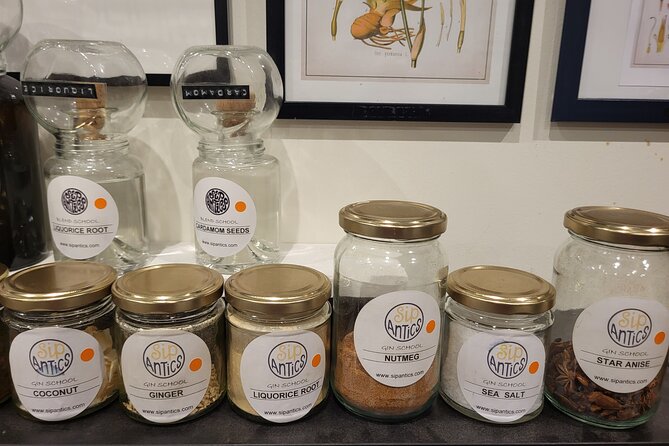
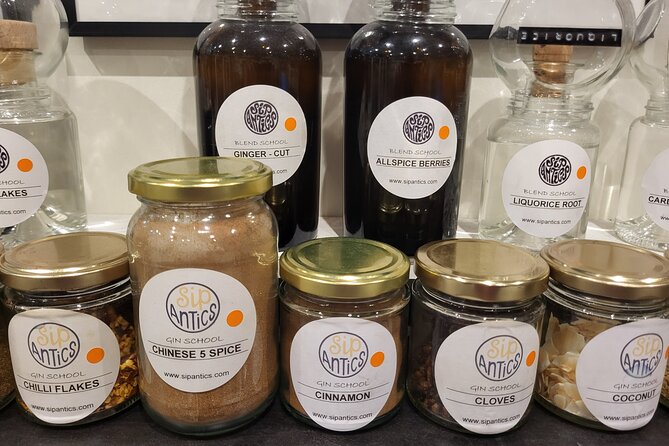
The recipe stage is where the class becomes personal. You can select as many as 10 botanicals from the ingredients available, with choices including fruits, herbs, and spices.
The most useful way to approach this is to smell each ingredient before committing. The class gives you the chance to think about how flavours might work together, rather than simply picking the most unusual options. Gary is described as having a good sense of which combinations work, so you can ask for help if your proposed recipe starts heading in too many directions.
I would take notes, even if only on your phone. You are creating a one-off bottle, and it is easy to forget the exact ingredients later. A simple record of your fruit, herbs, spices, and chosen proportions could help if you want to repeat the idea at home or compare it with another rum.
This is also a good activity for two friends or family members who enjoy making decisions together. One person might prefer a Christmas-style recipe with warming spices, while another may lean toward fruit and herbs. The group format lets you discuss those choices without losing the individual nature of each bottle.
The phrase bespoke rum should be understood in practical terms. You are making a personalised recipe during a guided class, not producing a large commercial batch. The result is valuable because it is yours, labelled as your creation, and unlikely to be duplicated exactly.
Working with an individual mini copper still
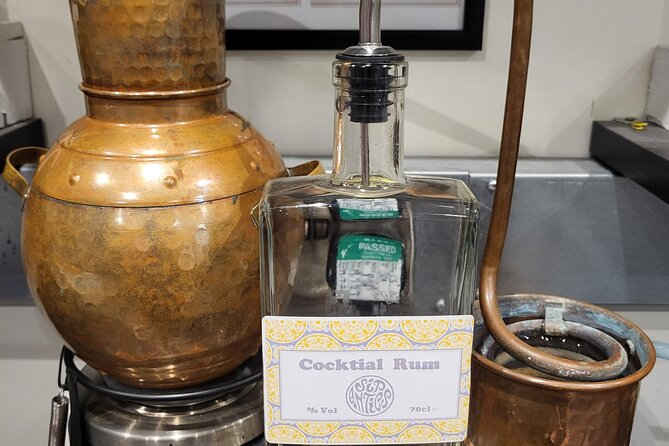
After choosing your ingredients, you use an individual mini copper still to distil your rum. This is the heart of the class and the point that makes it different from a standard tasting.
The still is small enough for one person to work with, and the host guides you through the process. You are not expected to arrive with technical knowledge. The class explains the steps and lets you take part, while the host keeps an eye on the practical side.
The distillation period also gives the afternoon a natural pause. While your rum is being made, you enjoy a cocktail and continue talking through the process. This means you are not standing over equipment for three hours. The session alternates between tasting, choosing, learning, and waiting for the next stage.
The details supplied do not promise that you will operate every part of the still without supervision, so think of this as a guided hands-on class. You get to work with your own small still, but the host remains responsible for explaining the process and helping you make sensible choices.
That balance is a plus for first-timers. You get the fun of doing something physical and unusual without being left to guess what comes next.
Same glens and lochs, a completely different day out:
- Loch Ness & Highlands Small-Group Tour from Edinburgh with Cruise
★ 4.5 · 6,022 reviews - Edinburgh Castle: Guided Walking Tour with Entry Ticket
★ 5.0 · 5,540 reviews - Edinburgh Castle Guided Walking Tour in English
★ 5.0 · 5,214 reviews - Edinburgh: Glenfinnan Viaduct, Glencoe & Fort William
★ 5.0 · 4,337 reviews
Tasting the new rum and finishing the bottle
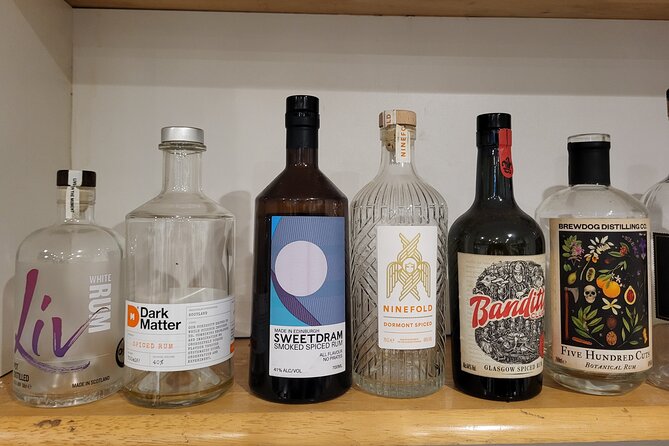
Once distillation is complete, you taste the rum before bottling it. This is a valuable moment because you can compare the finished drink with the samples you tried earlier and see how your ingredient choices affected the result.
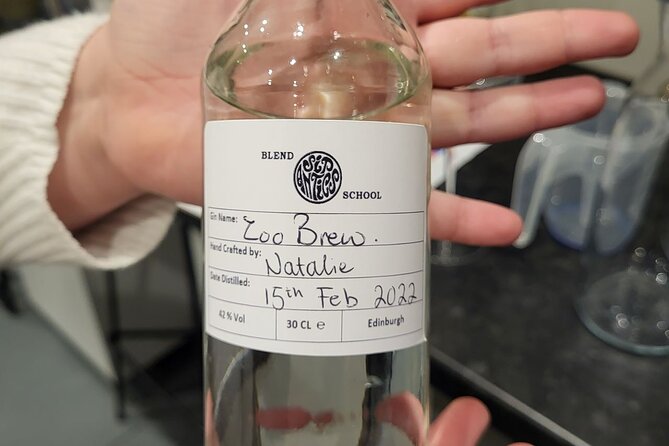
The rum is then measured for proof before it goes into a 500ml, or 50cl, bottle. You label and name it, then seal the bottle with wax. That final step turns the class into a proper souvenir rather than a fleeting tasting.
I especially like the naming stage. A bottle made from your own recipe already has a story, but a name gives it a little more personality. It could mark a birthday, a holiday, a shared joke, or the ingredients you chose.
Some people choose to let their bottle sit for a few weeks before opening it. That is not presented as a formal requirement, so you should follow the host’s advice at the time. The important point is that you leave with a finished bottle to take home, not a sample that disappears before dinner.
If you are buying this as a gift, the wax-sealed bottle makes the result feel more substantial. Several people have used the class as a birthday present or an activity shared with a friend or family member.
What the three-hour format really gives you
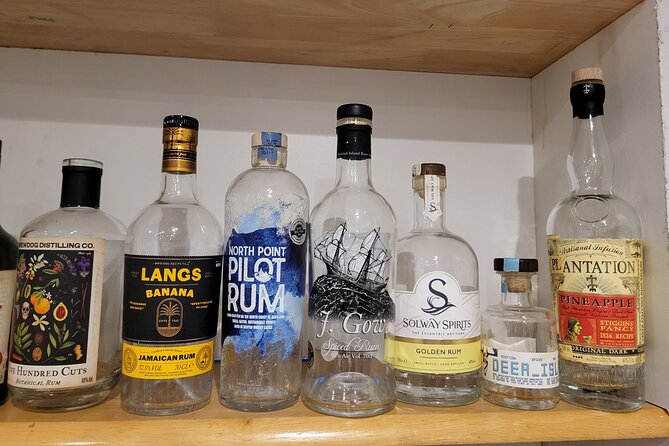
Three hours is a serious block of an afternoon. For some people, that is exactly the appeal. You get enough time for the tasting, ingredient selection, distillation, cocktails, final tasting, and bottling without cramming every step together.
The host can explain the process in detail, and the small group means you are not one person among 20 waiting for a turn. Gary is described as using humour to put people at ease, while Neil is praised for staying engaged from beginning to end. That personal hosting style is important because the class depends as much on conversation as equipment.
The trade-off is that the session may feel too long if you only want to sample rum. You are paying for participation and instruction, not simply for a flight of drinks. If your ideal Edinburgh afternoon is a fast stop between sightseeing appointments, this class may not fit comfortably.
The start time is 12pm, so it can work well as a planned afternoon activity. I would avoid booking it immediately before another fixed appointment, since the listed duration is approximate.
Is $123.40 good value?
At $123.40 per person, this is not a low-cost drink tasting. The price makes more sense when you count the parts: a welcome rum and mixer, three rum samples, cocktails during the distillation period, guided instruction, access to an individual mini copper still, and a 500ml bottle to take away.
The bottle is only part of the value. You are also paying for a small-group lesson and a hosted activity that gives you something to do with your hands. A standard bottle of rum would cost less, but it would not carry your chosen recipe, name, label, or wax seal.
I see the strongest value for a birthday, anniversary, unusual gift, or shared activity. It is also a good fit if you have already visited Edinburgh’s better-known sights and want an afternoon with a local, hands-on character.
The price is harder to justify if you are not especially interested in rum or do not enjoy alcohol-based tastings. You may not care much about selecting botanicals or learning about distillation, and the take-home bottle will not make up for an activity that does not suit your taste.
The experience is often booked well ahead, with an average booking lead time of 41 days. That suggests you should plan early, especially if you want a particular date. Free cancellation is available up to 24 hours before the start time. Changes or cancellations inside that period are not accepted for a refund.
Who will enjoy Sip Antics most?
I would recommend this to serious rum fans, curious beginners, and anyone who likes food or drink workshops. You do not need to know the technical language of distilling. The host explains the process and helps you make decisions, including the basic ones.
It is also well suited to couples, friends, and family members who want an activity that creates a physical souvenir. The bottle gives you something to take home, but the shared recipe-making is the main event.
This may not suit children, people who avoid alcohol, or anyone who wants a quiet, sightseeing-free afternoon. Service animals are allowed, and you should tell the provider about any allergies before booking.
The official group limit is no more than three people. That is a strong point if you prefer direct access to the host, though it also means the class may feel intimate rather than anonymous. The available material includes hosts called Gary and Neil, and both are presented as friendly and comfortable with questions.
Practical tips for making the most of the class
Arrive with enough time to locate The Cumberland Bar at 1 to 3 Cumberland Street. The activity starts at noon and finishes back at the meeting point.
Tell Sip Antics about allergies before the session. This is especially important when you are choosing from a selection of fruits, herbs, spices, and other flavouring ingredients.
Think about the kind of rum you like before you arrive, but keep your recipe flexible. The three samples and ingredient smells may change your mind. A simple flavour plan is useful, while trying to force too many unrelated ingredients into one bottle may not be.
Ask questions. The host is there to explain rum, gin, flavour profiles, and the distilling method, and the small group gives you a good chance to speak up.
Finally, plan the rest of your day with care. You will receive several alcoholic drinks over roughly three hours, including tasting samples, a welcome drink, and a cocktail. It is sensible to treat the class as the main event rather than something to squeeze between other bookings.
Should you book this rum-making class?
Book it if you want more than a drink in a glass. The combination of three tastings, botanical selection, personal distillation, and a wax-sealed bottle gives you a clear sense of progress from start to finish.
I would choose it as a gift for someone who likes rum, craft drinks, or hands-on workshops. The small group and relaxed hosts make it friendly for beginners, while the ability to create a one-off recipe gives experienced rum fans something to think about.
Skip it if you want a short tasting, dislike alcohol, or find three hours too long for one activity. At $123.40, it earns its price through participation and the finished bottle, not through quantity alone.
For the right person, this is an Edinburgh afternoon with a useful souvenir, a few new flavour ideas, and a story you can actually pour into a glass.
FAQ
Where does the rum-making class begin?
It begins at The Cumberland Bar, 1 to 3 Cumberland Street, Edinburgh EH3 6RT, UK.
What time does the class start?
The scheduled start time is 12pm.
How long does the experience last?
The class lasts approximately three hours.
How much rum do I take home?
You take home a 500ml, or 50cl, bottle of your custom rum.
How many people can join the class?
The activity has a maximum of three people.
Can I cancel for a full refund?
Yes. You can cancel for a full refund up to 24 hours before the experience start time. Cancellations and changes made less than 24 hours in advance are not accepted for a refund.
Just added around Edinburgh
- Half Day Sailing Trip★ 5.0 · 11 reviews
- Full Day Sailing Trip★ 5.0 · 10 reviews
- Blackness Castle Cruise★ 4.5 · 39 reviews
- Private South Queensferry Town Walking Tour★ 5.0 · 3 reviews
- Edinburgh Shore Excursion: City Tour and Royal Yacht Britannia★ 4.0 · 41 reviews
- Edinburgh Shore Excursion with a Local Guide: 100% Personalized & Private★ 4.0 · 7 reviews
- Edinburgh: West Highlands Privately Guided Day Tour in Luxury MPV★ 5.0 · 10 reviews
- Whisky Tasting at Edinburgh’s Award Winning Whiski Rooms★ 5.0 · 5 reviews
Edinburgh Tours, compared.
Underground Vaults Walking Tour in Edinburgh Old Town
Read our review →
Loch Ness, Scottish Highlands, Glencoe and Pitlochry Tour
Read our review →
Loch Ness & Highlands Small-Group Tour from Edinburgh with Cruise
Read our review →
Edinburgh Castle: Guided Walking Tour with Entry Ticket
Read our review →
Edinburgh Castle Guided Walking Tour in English
Read our review →