
Reviewed · WALKING TOURS
Edinburgh: Dean Village & New Town Walking Tour
Edinburgh’s Dean Village gives this walk its best surprise: within minutes of the city centre, you reach a quiet former mill district with old stonework, mill stones, and plaques carved with loaves and pies. From there, the route shifts to the broad streets and grand squares of the New Town, showing you a very different Edinburgh from the medieval Old Town.
I like the clear contrast between these two areas, and I like the way the guide connects buildings to people such as David Hume, Adam Smith, and Arthur Conan Doyle. Guides including Irene have also made this a friendly, lively walk, with useful restaurant suggestions along the way. The main consideration is weather: this is an outdoor tour, and poor conditions can lead to a new date or a full refund.
In This Review
- Key points at a glance
- Why Dean Village is the right place to begin
- Charlotte Square and the making of Georgian Edinburgh
- Rose Street and the New Town’s less respectable side
- Castle Street and Princes Street Gardens views
- The Scott Monument and Edinburgh’s literary identity
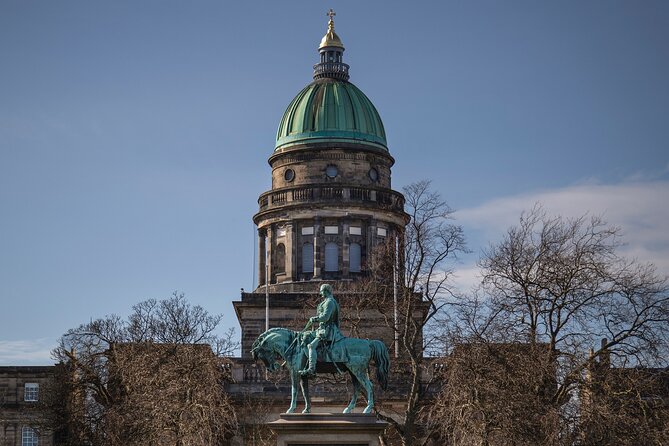
- George Street, statues, and the Dome
- Melville Monument and the difficult side of prosperity
- Dundas House and the final architectural detail
- What the $27.37 price gives you
- Who will get the most from this walk
- Should you book the Dean Village and New Town walk?
- FAQ
- How long does the Edinburgh Dean Village and New Town tour last?
- Where does the tour start?
- Where does the tour finish?
- Is admission to the Georgian House included?
- How large is the tour group?
- Can I cancel for a full refund?
Key points at a glance
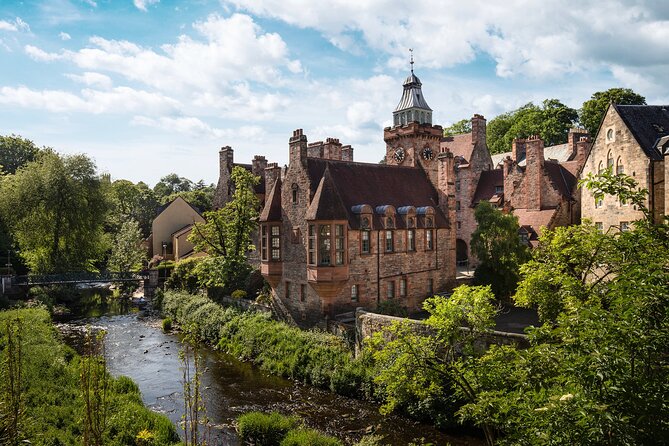
- Dean Village’s mill-town past: See the former industrial quarter where bakers, weavers, and water mills shaped daily life.
- Georgian Edinburgh in one walk: Compare Charlotte Square’s formal neoclassical design with the narrow medieval streets you may have seen in the Old Town.
- Ideas behind the Athens of the North: Learn how the Scottish Enlightenment changed Edinburgh’s reputation and influenced writers, scientists, and inventors.
- Castle views from the centre: Stop in Castle Street and Princes Street Gardens for different angles on the rock and castle.
- A social history beyond grand facades: Hear about Georgian households, secret New Town bars, and the role of colonial wealth in the city’s growth.
- A convenient finish: The walk ends outside Dundas House in St. Andrews Square, close to central shops, restaurants, and the Christmas market area when it is operating.
Why Dean Village is the right place to begin
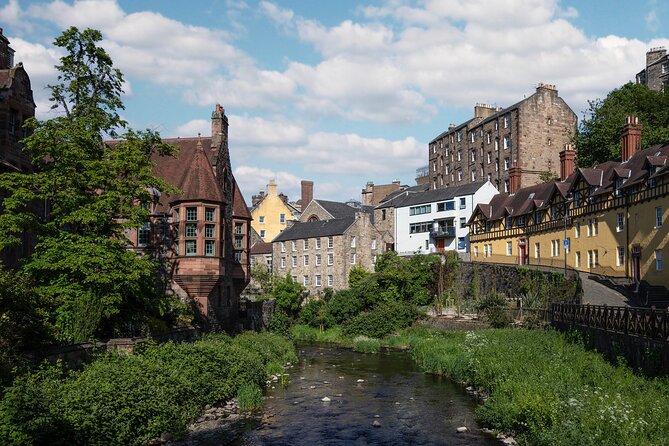
The meeting point is at 2 to 4 Hope Street, near the central New Town. From there, the guide takes you toward Dean Village, a short distance from Princes Street but noticeably calmer in character.
Dean Village developed around water-powered industry. Bakers and weavers lived and worked here, and the surviving stone details help you picture a working settlement rather than the postcard scene it can seem today. Mill stones and plaques decorated with baked bread and pies give the area a direct link to its past.
You get about 30 minutes here, enough time to understand why this small quarter matters and to take photographs without rushing through it. The setting is appealing, but keep your expectations sensible. Dean Village is compact, and the stop is about atmosphere and interpretation rather than a long list of indoor sights.
This opening also gives the tour a useful rhythm. You begin with a medieval industrial community, then move into the planned Georgian city. That change is the main idea of the whole walk: Edinburgh is not one uniform historic centre. Its character shifts sharply from district to district.
A few more Edinburgh trips to weigh up
- Underground Vaults Walking Tour in Edinburgh Old Town
★ 4.5 · 8,506 reviews - Edinburgh Castle: Guided Walking Tour with Entry Ticket
★ 5.0 · 5,540 reviews - Edinburgh Castle Guided Walking Tour in English
★ 5.0 · 5,214 reviews
Charlotte Square and the making of Georgian Edinburgh
After Dean Village, the route reaches Charlotte Square, one of the most polished parts of the New Town. The square helps explain why Edinburgh earned the title Athens of the North. Its neoclassical buildings reflect the order, symmetry, and classical taste prized during the Georgian period.
The stop lasts about 10 minutes, so you will hear the main story rather than spend a long time examining every facade. That is a fair trade on a walking tour covering several neighbourhoods. The guide’s role here is to help you read the square, not simply point out attractive buildings.
Outside the Georgian House, you get a closer look at how Edinburgh’s wealthy residents lived during the 18th and 19th centuries. The building is operated by the National Trust for Scotland, but entrance is not included in this walk. You stop outside and discuss high society, household life, and the meaning of the grand New Town mansion.
That distinction matters when you plan your day. If you want to see an actual Georgian interior, you would need to arrange a separate visit. If you mainly want context for the architecture, the exterior stop gives you that without adding another admission charge or a longer indoor visit.
Rose Street and the New Town’s less respectable side
From Charlotte Square, the route enters the New Town grid and reaches Rose Street. Today, Rose Street is known for pubs, making it a useful place to discuss the social life of the city rather than just its architecture.
The guide explains why secret bars were established in the New Town. This adds a human layer to the elegant streets. Grand facades can make Georgian Edinburgh look perfectly respectable, but ordinary life included drinking, private gatherings, and efforts to keep certain activities out of public view.
You spend around 10 minutes here. It is a short stop, but it breaks up the procession of squares and monuments. If you are choosing between a tour that focuses only on buildings and one that also explains how people used them, this is one of the more appealing parts of the route.
The area also gives you practical options after the walk. Rose Street is known for pubs, and the guides have offered restaurant tips during the tour. I would treat those suggestions as a useful starting point, especially if you want to eat near the New Town rather than return to the Old Town.
Castle Street and Princes Street Gardens views
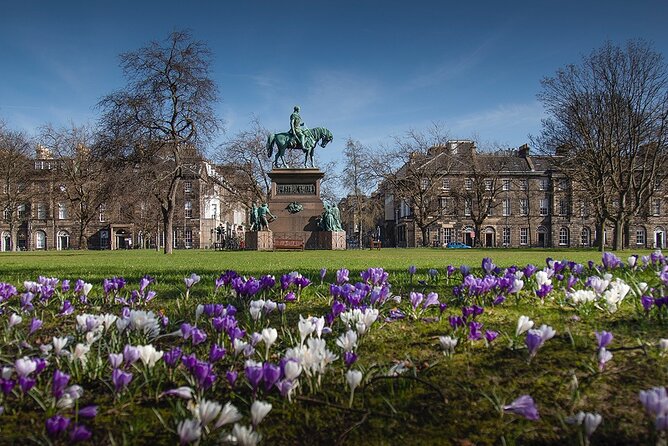
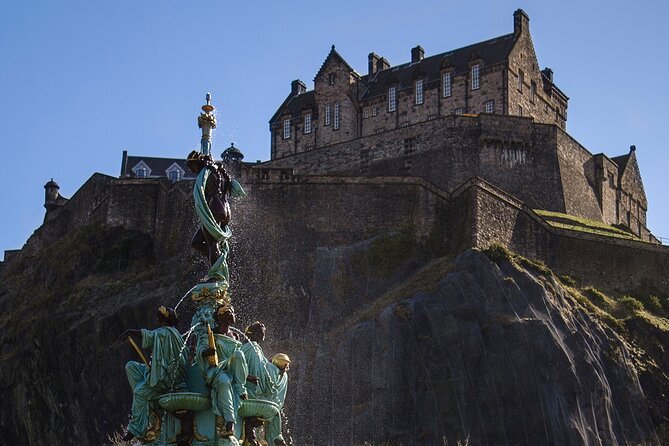
Castle Street provides one of the route’s strongest photo stops. From here, you can look toward Edinburgh Castle and the volcanic rock beneath it. The view helps you understand how sharply the castle dominates the city, even while you are walking through the newer district.
The group then crosses Princes Street and enters Princes Street Gardens. You spend about 15 minutes in the park, with time to see public art and take in another view of the castle and castle rock.
This part is valuable because it links the New Town to Edinburgh’s wider layout. You are not simply looking at isolated monuments. The garden, the main shopping street, the castle, and the planned streets all sit within the same central frame.
The stop is also a welcome change from paved streets and building fronts. Since the tour lasts more than two hours, the open gardens give you a brief pause before the route continues toward the Scott Monument. The gardens are free to enter as part of the walking route, and no attraction ticket is required for the stop.
Same glens and lochs, a completely different day out:
- The World Famous Underground Ghost Tour
★ 4.5 · 9,272 reviews - Loch Ness, Scottish Highlands, Glencoe and Pitlochry Tour
★ 5.0 · 6,854 reviews - Loch Ness & Highlands Small-Group Tour from Edinburgh with Cruise
★ 4.5 · 6,022 reviews - Edinburgh: Glenfinnan Viaduct, Glencoe & Fort William
★ 5.0 · 4,337 reviews
The Scott Monument and Edinburgh’s literary identity
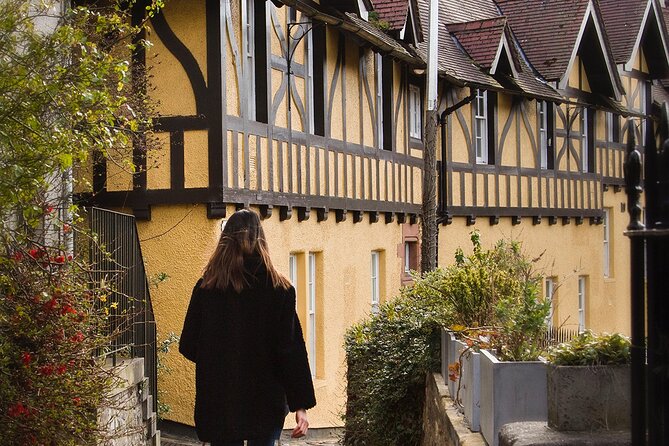
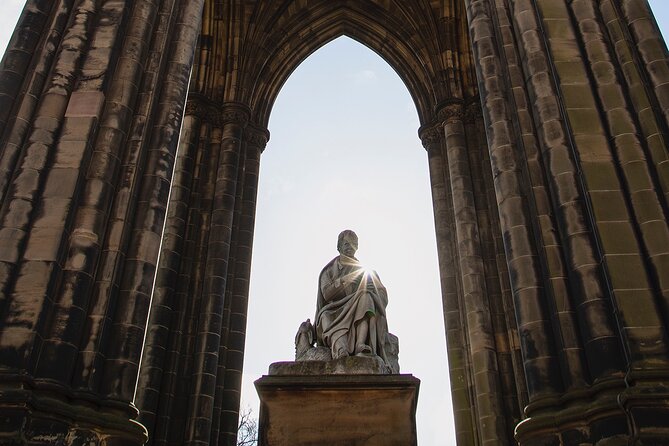
The Scott Monument is one of Edinburgh’s most recognisable landmarks, and the tour spends roughly 15 minutes explaining both its history and its architecture. You also learn that it is the largest monument in the world dedicated to a writer.
That fact fits neatly with the tour’s wider interest in Scottish writers and thinkers. Edinburgh’s identity is not built only on royal buildings and military history. Literature, science, and political ideas helped shape its public image, and the monument gives that story a strong physical focus.
You do not climb the monument on this tour, and entry is not part of the experience. Instead, you receive an explanation of why it was built and what it represents. For many people, that is enough to make the monument more meaningful than a quick photograph from Princes Street.
If you have already visited the Old Town and Royal Mile, this stop helps the city feel broader. One person who booked both an Old Town tour and this walk found the New Town route a useful second look at Edinburgh, rather than a repeat of the same central sights.
George Street, statues, and the Dome
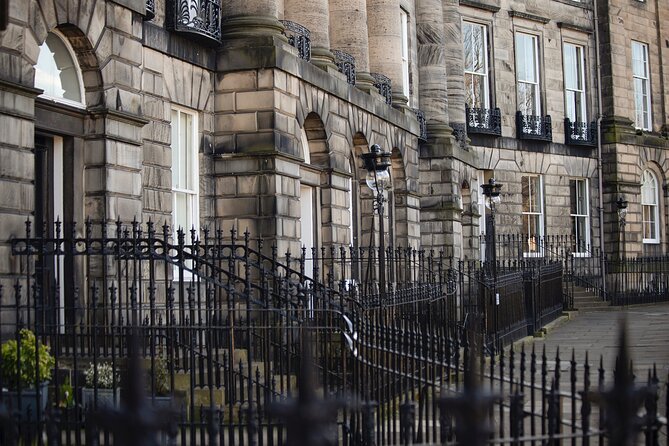
The route returns to the New Town grid and follows the eastern part of George Street. This section is known for cafes, restaurants, and statues, including monuments to King George IV and James Clerk Maxwell.
George Street is one of the main arteries of the New Town, and its scale makes the planned city easy to grasp. The wide road and formal architecture contrast with the tight streets of the Old Town. You get about 10 minutes here, enough for the guide to point out key figures and explain the street’s role.
The walk then reaches the Dome, an impressive neoclassical building associated with restaurants, hotels, and shops. The stop is brief, around five minutes, but the building works as a visual summary of New Town style. Its grand exterior shows how classical design was adapted for civic and commercial life.
This is not a restaurant tasting tour, and no food or drink is included. You are seeing the buildings and hearing their context. That makes the route a good choice if architecture and urban history matter more to you than extended time inside cafes or pubs.
Melville Monument and the difficult side of prosperity
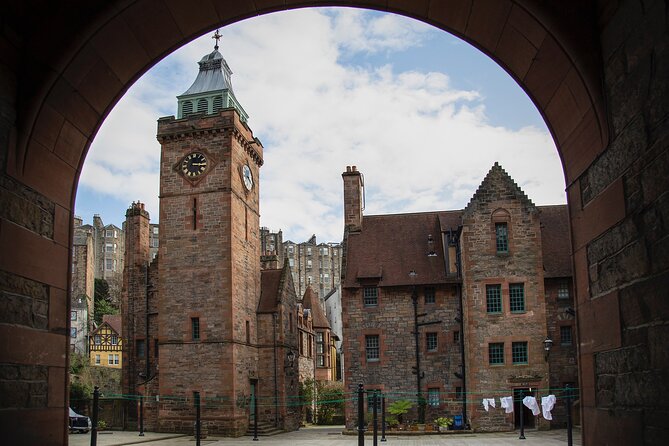
At St. Andrew Square, the Melville Monument provides a chance to discuss the British colonial period and its link to Edinburgh’s growth. This is an important part of the experience because the New Town can otherwise seem like a purely architectural success story.
The monument is imposing, and the guide explains why it was built and how its subject connects to Britain’s colonial power. You spend around 10 minutes here. That is long enough to introduce the subject without pretending that one walking tour can cover every part of Edinburgh’s relationship with empire.
I value this stop because it encourages you to look past polished stone and ask who benefited from the wealth that paid for grand streets, monuments, and houses. The tour does not present the New Town as a perfect creation. It connects beauty and power, which gives the walk more honesty than a simple list of handsome buildings.
The route ends nearby, so this is also a useful final stop rather than an out-of-the-way detour. St. Andrew Square puts you in a practical position for continuing your day in central Edinburgh.
Dundas House and the final architectural detail
Across from the Melville Monument, you reach Dundas House. The building was inspired by the books of Italian Renaissance architect Andrea Palladio, giving the tour one last example of how ideas from continental Europe shaped Edinburgh’s architecture.
Dundas House is now a bank. If it is open, the guide may take the group inside, but that access is not guaranteed. The confirmed ending is outside the building, in St. Andrew Square.
This final stop is a fitting close because the tour has moved from medieval mills to Georgian planning, classical design, public monuments, and the financial power behind the city. You finish with a building that links Edinburgh to a wider European architectural tradition.
The walk lasts about two hours and 15 minutes. With 11 stops, the pace is steady, with short explanations at most locations and a longer opening visit in Dean Village. A maximum of 20 people keeps the group from becoming enormous, though it is still a group experience rather than a private walk.
What the $27.37 price gives you
At $27.37 per person, the value comes from the amount of interpretation packed into a central walking route. You do not pay separate entrance fees for the outdoor stops, and the price includes a local guide. The Georgian House is viewed from outside, and no food, drink, or attraction admission is included.
I see this as a strong price for someone who wants orientation and context on a first or second day in Edinburgh. A guide can connect Dean Village, Charlotte Square, Princes Street Gardens, and St. Andrew Square in a way that is harder to achieve by wandering between them with a map.
The value is less clear if you want long visits inside buildings or plenty of free time at each stop. This is a compact overview of two contrasting districts. You are paying for the route and the stories, not for entry to the Georgian House, Scott Monument, or another paid attraction.
The activity uses a mobile ticket, and it is generally suitable for most participants. Service animals are allowed, and the meeting point is near public transport. Since the tour requires good weather, check the forecast before setting aside the morning or afternoon. If poor weather cancels the experience, you are offered another date or a full refund.
Free cancellation is available until 24 hours before the start time. Changes or cancellations inside that window are not accepted for a refund. The tour also requires a minimum number of participants, so an insufficient group can lead to a different date, another experience, or a full refund.
Who will get the most from this walk
I would choose this tour if you have already seen, or plan to see, the Old Town and want a different side of Edinburgh. It suits anyone curious about classical architecture, writers, the Scottish Enlightenment, and the forces that expanded the city beyond its medieval core.
It is also a good fit for first-time visitors who want a quick sense of direction. You finish at St. Andrew Square, near central shops, restaurants, and the Christmas market area when in season, so the route can fit neatly into a wider day.
The walk may appeal especially to people who prefer neighbourhoods to a checklist of major interiors. Dean Village is the emotional highlight, while the New Town provides the intellectual and architectural substance. Several guides, including Irene, have been praised for making the material friendly and clear, so expect conversation and explanation rather than a dry lecture.
I would be more cautious if your priority is Edinburgh Castle, the Royal Mile, or indoor museum time. None of those is the main purpose here. You see the castle from outside, and the tour focuses on streets, squares, monuments, and public spaces.
Comfortable walking shoes are sensible, and you should dress for changeable Scottish weather. The tour is outdoors, and the weather policy is a real practical issue, not fine print to ignore.
Should you book the Dean Village and New Town walk?
Book it if you want to understand how Edinburgh changed from a medieval mill town and Old Town to a planned Georgian capital. The combination of Dean Village’s quiet stone lanes and the New Town’s grand squares gives you two very different settings in one affordable walk.
I especially recommend it after an Old Town visit. The route fills in the other half of central Edinburgh, introduces figures such as Hume, Smith, and Conan Doyle, and does not avoid the colonial history behind the city’s prosperity.
Skip it if you want extensive time inside attractions, a food-focused outing, or a private guide. For everyone else, the $27.37 cost, central finish, small maximum group, and strong focus on architecture and ideas make this a useful addition to an Edinburgh stay. Try to book ahead, since the experience is often reserved about 118 days in advance.
FAQ
How long does the Edinburgh Dean Village and New Town tour last?
The walk lasts approximately 2 hours and 15 minutes.
Where does the tour start?
The meeting point is 2 to 4 Hope Street, Edinburgh EH2 4DB, UK.
Where does the tour finish?
The tour ends outside Dundas House in St. Andrew Square, Edinburgh EH2 2YB.
Is admission to the Georgian House included?
No. The tour stops outside the Georgian House and discusses Georgian life and architecture. Entry to the house is not included.
How large is the tour group?
The experience has a maximum of 20 participants.
Can I cancel for a full refund?
Yes. You can cancel at least 24 hours before the start time for a full refund. Poor weather or failure to meet the minimum number of participants can also lead to a new date or a full refund.
Just added around Edinburgh
- Full Day Sailing Trip★ 5.0 · 10 reviews
- Half Day Sailing Trip★ 5.0 · 11 reviews
- Blackness Castle Cruise★ 4.5 · 39 reviews
- Private South Queensferry Town Walking Tour★ 5.0 · 3 reviews
- Edinburgh Shore Excursion: City Tour and Royal Yacht Britannia★ 4.0 · 41 reviews
- Edinburgh Shore Excursion with a Local Guide: 100% Personalized & Private★ 4.0 · 7 reviews
- Edinburgh: West Highlands Privately Guided Day Tour in Luxury MPV★ 5.0 · 10 reviews
- Whisky Tasting at Edinburgh’s Award Winning Whiski Rooms★ 5.0 · 5 reviews
Walking Tours, compared.
Underground Vaults Walking Tour in Edinburgh Old Town
Read our review →
Edinburgh Castle: Guided Walking Tour with Entry Ticket
Read our review →
Edinburgh Castle Guided Walking Tour in English
Read our review →
Edinburgh Darkside Walking Tour: Mysteries, Murder and Legends
Read our review →
Old Town Walking Tour History and Tales in Edinburgh
Read our review →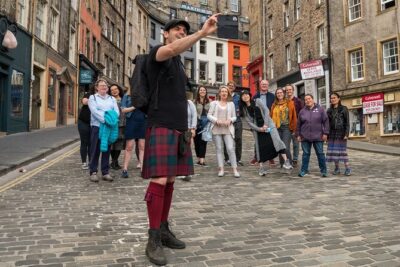
Haunted Vaults and Graveyard Walking Tour in Edinburgh
Read our review →Browse the lists this tour appears in