
Reviewed · HISTORICAL TOURS
Medical and Surgical History of Edinburgh – Private Walking Tour
Edinburgh’s medical story unfolds in the streets, closes, courtyards, and old school buildings of the Old Town. This private walk follows that story from the Royal Mile to the former Royal Infirmary, linking early teaching hospitals with famous doctors, surgeons, students, and the long struggle to admit women to medical training.
I like the street-level setting, since you are not confined to a display case or lecture room. I also like the guide’s medical background and the chance to discuss healthcare as you walk. The main drawback is the distance: about 2.5 miles over three to four hours, so this is not a good choice if walking causes chronic or painful joint and muscle trouble.
In This Review
- Key points to know before booking
- A medical tour that uses Edinburgh as its classroom
- Starting at the Royal Mile and Edinburgh’s first medical institutions
- Robertson’s Close and the first teaching hospital
- Surgeons’ Hall and the fight for women’s medical education
- The University of Edinburgh and the life of a medical student
- Bristo Place, Charles Darwin, and the 1880s Medical School
- Lauriston Place and the former Royal Infirmary
- How the private format affects the experience
- Timing, terrain, and what to bring
- Who will get the most from this walk
- Should you book the Medical and Surgical History of Edinburgh walk?
- FAQ
- How long does the tour take?
- How far do you walk?
- Where does the tour start?
- Where does the tour finish?
- Is this a private tour?
- Is admission to the museums or historic sites included?
- Are refreshments included?
- Can I cancel for a full refund?
Key points to know before booking
- Start on the Royal Mile: Learn how Edinburgh’s medical institutions began near the city’s oldest main street.
- See the first teaching hospital sites: Robertson’s Close and the early Royal Infirmary give the tour its strongest sense of place.
- Hear the women’s medical-school story: Surgeons’ Hall is linked to the difficult campaign for women’s admission.
- Meet Edinburgh’s student past: The route passes Charles Darwin’s former lodgings and the old Medical School.
- Expect a private pace: Only your group takes part, with guiding and commentary included.
- Bring money for the café stop: Coffee or tea is not included, and the break takes place during the walk.
A medical tour that uses Edinburgh as its classroom
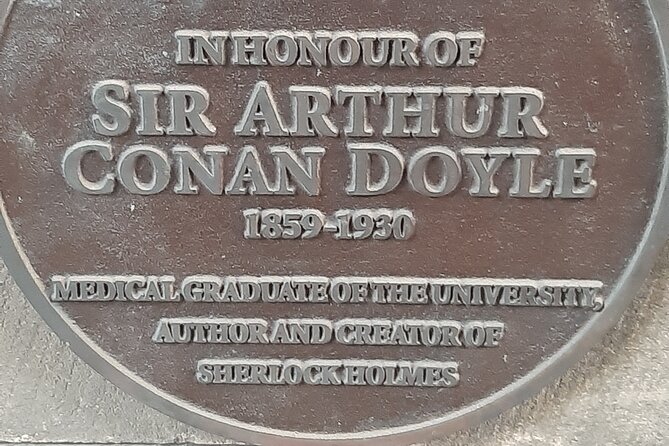
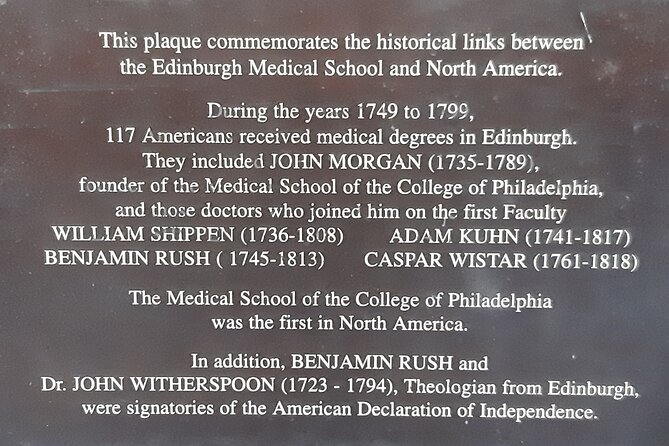
This is not a museum visit dressed up as a walking tour. The streets themselves form the lesson. You move from the Royal Mile through the Cowgate area, onward to Surgeons’ Hall and the University of Edinburgh, then finish at the grand front courtyard of the former Royal Infirmary.
That approach matters. Edinburgh’s medical past is tied to specific buildings and lanes, so the walk helps you connect names and dates with real places. You can see where teaching happened, where hospitals developed, and how medical education became one of the city’s great claims.
The guide is identified as Moray, and some feedback also addresses him as Dr. Grigor. His medical background adds useful context, especially if you want more than a standard history talk. The tour also leaves room for conversation about healthcare, rather than treating the subject as a one-way speech.
You should expect a serious subject delivered with warmth and humor. The experience covers surgery, hospitals, medical education, social history, and student life. It is especially suited to doctors, nurses, medical students, academics, and anyone curious about how healthcare changed over time. You do not need a medical background, but a broad interest in the subject will help you get the most from it.
A few more Edinburgh trips to weigh up
- Old Town Walking Tour History and Tales in Edinburgh
★ 5.0 · 2,168 reviews - Old Town Historical and Underground Tour
★ 5.0 · 1,574 reviews - Multi-Sensory Small-Group Historic Vaults Tour in Edinburgh
★ 4.5 · 1,384 reviews
Starting at the Royal Mile and Edinburgh’s first medical institutions
The meeting point is Hunter Square, near the Royal Mile. From there, the walk heads along Edinburgh’s oldest street and begins with the origins of medicine and surgery in the city.
The first section lasts about 45 minutes. Its focus is the early medical community and the alleyway associated with the beginnings of the College of Physicians. This is a strong opening because it places medical history inside the crowded Old Town rather than presenting it as an isolated subject.
You will likely hear how Edinburgh’s medical profession developed alongside the city’s wider growth. The supplied route does not list every story or figure covered, so you should allow the guide to set the pace and follow the links between places. The value here comes from location: you are standing near the setting of early professional activity instead of simply hearing a list of institutions.
The Royal Mile is busy and uneven in places, so wear firm, comfortable shoes. The tour is not described as technically difficult, but its length and Edinburgh’s old streets call for moderate fitness.
Robertson’s Close and the first teaching hospital
The route then turns toward the Cowgate area, where it locates Robertson’s Close and the site of The Little House. This early facility is described as Edinburgh’s first teaching hospital.
The stop lasts about an hour, making it the longest part of the tour. That gives the guide room to explain not only the building itself, but also the development of its successor, the first Royal Infirmary of Edinburgh.
For me, this is likely the core of the experience. A teaching hospital changes the story from individual doctors to a system. You begin to see how medical knowledge was passed on, how hospital care and education became linked, and why Edinburgh gained importance as a medical centre.
The Cowgate setting also adds contrast. You move away from the Royal Mile’s grand route into a more tucked-away part of the Old Town, where the medical story can feel less polished and more connected to everyday city life. The route description does not promise entry into every site, and admission tickets are listed as free because this is an outdoor walking experience. You should think of the stops as explained locations, not guaranteed interior visits.
Surgeons’ Hall and the fight for women’s medical education
After the Cowgate and early infirmary sites, the walk reaches Surgeons’ Hall Museums. Here, you take a refreshment break and hear about the years-long fight for women to enter the Medical School.
This is an important part of the route because it brings social change into a story that could otherwise focus only on famous male doctors. Medical education is not just about buildings and breakthroughs. It is also about who was allowed to study, qualify, and work.
The stop lasts around 45 minutes. Coffee and tea are not included, so bring money for your own drink or snack. The break should make the long walk easier, but the tour does not state the exact café, menu, or length of the purchase stop.
One practical point is worth making clear: the route passes Surgeons’ Hall Museums, but the experience does not include a museum tour according to the supplied information. If you specifically want medical specimens, surgical instruments, or exhibition galleries, you should arrange a separate museum visit and not assume it is part of this booking.
Same glens and lochs, a completely different day out:
- The World Famous Underground Ghost Tour
★ 4.5 · 9,272 reviews - Underground Vaults Walking Tour in Edinburgh Old Town
★ 4.5 · 8,506 reviews - Loch Ness, Scottish Highlands, Glencoe and Pitlochry Tour
★ 5.0 · 6,854 reviews - Loch Ness & Highlands Small-Group Tour from Edinburgh with Cruise
★ 4.5 · 6,022 reviews
The University of Edinburgh and the life of a medical student
The next stop is the former home of the Medical School at the University of Edinburgh. This section lasts about 20 minutes and looks at the city’s growing importance as a place to study medicine.
The subject then shifts from institutions to people. You hear about the drudgery and rewards of medical student life. That detail gives the route a human scale. Great medical schools are built from daily work, long study, pressure, ambition, and the hope of a useful career.
I like this part because it should connect the grand names of Edinburgh medicine with the ordinary experience of students. The information provided does not spell out the exact anecdotes, so the guide’s storytelling will shape this section. Still, the theme is clear: the tour is concerned with how medicine was taught, not only with what doctors achieved.
This is also where the private format can help. With only your own group taking part, you can ask questions about education, professional life, or the difference between historical and modern medical training. A large group would make that sort of exchange harder.
Bristo Place, Charles Darwin, and the 1880s Medical School
At Bristo Place, the walk passes the site of Charles Darwin’s former student lodgings. You then continue toward the imposing 1880s Medical School and graduation hall.
The stop takes about 25 minutes. Darwin’s connection gives the route a familiar name, but the larger point is the setting of medical education in nineteenth-century Edinburgh. His former lodgings help show how students were woven into the city, while the later Medical School and graduation hall signal the scale and status the institution had gained.
You should not expect a Darwin-focused tour. His lodgings are one part of a broader medical and student story. The attraction is the link between an individual student and the institutions around him.
The buildings also help you track the city’s changing ambitions. Early teaching spaces and hospital sites lead to more formal medical buildings. That physical progression makes the development of Edinburgh’s medical centre easier to follow.
Lauriston Place and the former Royal Infirmary
The final stop is at Lauriston Place, in the entrance plaza of the former Royal Infirmary of Edinburgh. The walk ends at the Edinburgh Futures Institute, University of Edinburgh, at 1 Lauriston Place.
The closing section lasts about 15 minutes and focuses on notable doctors and surgeons connected with the institution. After the earlier discussion of first hospitals, teaching, students, and professional access, this final courtyard gives the tour a natural finish.
The setting is described as magnificent, with a grand front courtyard. That makes it a better ending than simply stopping at an ordinary street corner. You finish at a major former medical institution, with the story gathered around the doctors and surgeons who shaped it.
The end point is different from the start, so plan your onward journey from Lauriston Place rather than back at Hunter Square. The tour listing describes the finish as the former Royal Infirmary’s front courtyard, now associated with the university’s Futures Institute.
How the private format affects the experience
This is a private activity, so only your group participates. That is useful for a subject with many questions and side stories. You can ask the guide to explain a term, spend more time on surgery, or focus on student life and medical education.
The guide’s medical experience is another practical advantage. Feedback identifies Moray as a physician, and this personal perspective may help connect old medical practice with present-day healthcare. It does not turn the tour into a clinical seminar, but it gives you someone who can speak about the profession from more than a purely academic angle.
A private walk also costs more than joining a large public group. The listed price is $130.44 per person, with group discounts available. That price is easiest to justify for a small group that values personal attention and a specialist guide. For one or two people on a tight budget, it is a substantial spend, especially since museum admission and refreshments are not included.
Still, the price covers three to four hours of guiding and commentary. If your group has a strong interest in medical or social history, the time and flexibility may offer better value than a short general city walk. If you want only a quick overview of Edinburgh, this is too specialized.
The tour is booked around 75 days ahead on average, so early planning makes sense, particularly for a fixed Edinburgh schedule. Confirmation is sent within 48 hours, subject to availability.
Timing, terrain, and what to bring
The advertised duration is three to four hours, though one account of the experience reached four hours or more. Set aside the full afternoon rather than scheduling a tight appointment soon afterward.
The route covers about 2.5 miles. That is manageable for many people, but the pace includes standing, walking, and time on older city streets. Moderate physical fitness is advised, and the tour is not recommended for anyone with chronic or painful musculoskeletal conditions.
Wear comfortable shoes and check the forecast. The experience requires good weather. If poor weather causes cancellation, you are offered another date or a full refund.
The tour is offered in English, with a mobile ticket. Service animals are allowed, and the route is near public transportation. Guiding and commentary are included, while coffee and tea at the break are extra.
Who will get the most from this walk
I would choose this tour if you have already seen Edinburgh’s main sights and want a more focused subject. It also fits well into a trip built around medicine, science, universities, or Scottish social history.
It should suit:
- Medical professionals and students
- Families with older children who enjoy history
- University visitors and academics
- People interested in surgery and hospital development
- Repeat visitors seeking a less familiar side of Edinburgh
- Small groups who prefer private discussion
I would think twice if your main goal is a medical museum. Surgeons’ Hall Museums is part of the route, but the walk does not include a museum tour. I would also avoid booking it if you need a short, easy stroll or if you have only an hour free.
The content appears to be serious but not dry. The guide has been praised for clear pacing, entertaining delivery, Scottish facts, and lively discussion. That matters during a long walk, since a strong subject can still feel heavy if presented as a string of dates and names.
Should you book the Medical and Surgical History of Edinburgh walk?
Book it if you want Edinburgh explained through its hospitals, medical school, surgeons, students, and social changes. The route has a clear beginning and end, the private format allows questions, and the guide’s medical background adds a personal professional angle.
Skip it if you want indoor museum collections, a general Old Town tour, or a low-cost introduction to Edinburgh. At $130.44 per person, it is a specialist experience, not a bargain sightseeing walk. For a small group with genuine interest in medicine and the city’s past, though, the long route and focused commentary can make the price worthwhile.
FAQ
How long does the tour take?
The tour lasts approximately three to four hours. You should allow extra time if you have plans immediately afterward, since the walk may run longer than three hours.
How far do you walk?
The route covers approximately 2.5 miles. Moderate physical fitness is recommended.
Where does the tour start?
The meeting point is Hunter Square, Edinburgh EH1, near the Royal Mile.
Where does the tour finish?
The tour finishes at the Edinburgh Futures Institute, The University of Edinburgh, 1 Lauriston Place, Edinburgh EH3 9EF. The end point is in the grand front courtyard of the former Royal Infirmary of Edinburgh.
Is this a private tour?
Yes. Only your group participates in the activity.
Is admission to the museums or historic sites included?
Guiding and commentary are included. The information provided does not include museum admission, and the tour does not promise an indoor museum visit at Surgeons’ Hall Museums.
Are refreshments included?
No. The tour includes a café refreshment stop, but coffee, tea, food, and drinks are not included in the price.
Can I cancel for a full refund?
You can cancel up to 24 hours before the experience begins for a full refund. Changes or cancellations made less than 24 hours before the start time are not accepted for a refund. If poor weather cancels the tour, you are offered a different date or a full refund.
Just added around Edinburgh
- Half Day Sailing Trip★ 5.0 · 11 reviews
- Full Day Sailing Trip★ 5.0 · 10 reviews
- Blackness Castle Cruise★ 4.5 · 39 reviews
- Private South Queensferry Town Walking Tour★ 5.0 · 3 reviews
- Edinburgh Shore Excursion: City Tour and Royal Yacht Britannia★ 4.0 · 41 reviews
- Edinburgh Shore Excursion with a Local Guide: 100% Personalized & Private★ 4.0 · 7 reviews
- Whisky Tasting at Edinburgh’s Award Winning Whiski Rooms★ 5.0 · 5 reviews
- Edinburgh: West Highlands Privately Guided Day Tour in Luxury MPV★ 5.0 · 10 reviews
Historical Tours, compared.
Old Town Walking Tour History and Tales in Edinburgh
Read our review →
Multi-Sensory Small-Group Historic Vaults Tour in Edinburgh
Read our review →
Edinburgh Old Town: Historical Guided Walking Tour
Read our review →

Browse the lists this tour appears in