
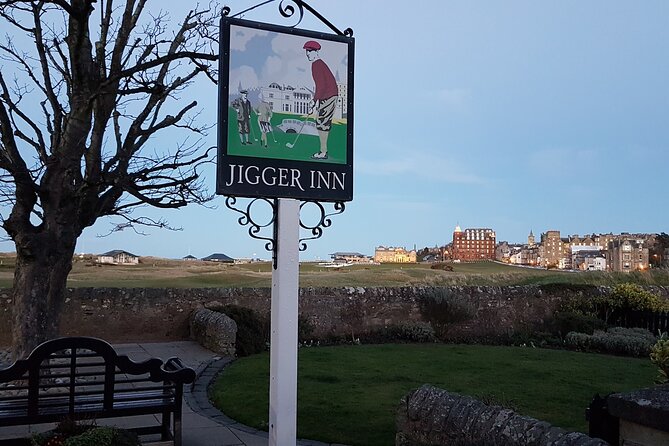
Reviewed · ST ANDREWS TOURS
St Andrews Old Course History Tour, for the Golfer
The best part of this tour is the chance to connect the famous Old Course with the people and stories that shaped it. You walk from the town toward the Links, hear about early golf, then reach the 1st and 18th holes, the Road Hole, and Swilcan Bridge. Former caddie Richard brings first-hand experience to the talk, which gives the course more meaning than a quick photo stop.
I like the small group limit of 15, since you have a better chance of hearing the guide and asking questions. I also like the balance between golf facts and town history, making this useful for a serious golfer and the non-golfer who came along. The main drawback is Richard’s fast speaking pace, so a strong command of English is essential.
In This Review
- Key points before you book
- Why this short walk adds meaning to St Andrews
- Starting at Hotel du Vin and meeting St Andrews
- The Links and the early story of golf
- The Royal and Ancient Golf Club and the course taking shape
- Grannie Clark’s Wynd and the move to 18 holes
- Rusacks, the 1st tee, and the 18th green
- Swilcan Bridge and the photographs everyone wants
- The Road Hole and a finish at the Jigger Inn
- What the guide’s style means for you
- Who should book this Old Course tour?
- Is $25 good value for 75 minutes?
- Should you book the St Andrews Old Course History Tour?
- FAQ
- How long does the St Andrews Old Course History Tour last?
- Where does the tour begin?
- Where does the tour finish?
- Are photos at Swilcan Bridge included?
- Is the tour suitable for non-golfers?
- What language is the tour offered in?
Key points before you book
- A former Old Course caddie leads the walk: Richard adds personal stories, humor, and practical insight to the history.
- You reach both the 1st and 18th holes: The tour explains how the course changed from earlier layouts of 12 and 10 holes into the 18-hole course known today.
- Swilcan Bridge is the photo stop: Professionally taken photos are included, except during tournament days.
- The walk lasts about 75 minutes: It covers the Links at an easy pace, with frequent stops for stories and explanation.
- The tour finishes near the Jigger Inn: You can stop for food or drinks beside the 17th fairway afterward, but refreshments are not included.
- English ability and mobility matter: The guide speaks quickly, and the route is not suitable for strollers, walking frames, mobility scooters, crutches, or some recent injuries.
Why this short walk adds meaning to St Andrews
St Andrews can be a slightly puzzling place for a first-time golf visitor. You see fairways crossing open ground, roads near the course, hotels facing famous holes, and people taking photographs near what looks like an ordinary stone bridge. The Old Course History Tour gives those sights a story.
This is not a round of golf, a museum visit, or a chance to play a hole. It is a guided walk around the public areas near the Old Course, with access and movement shaped by play on the day. The value comes from understanding what you are looking at, why the course has its unusual shape, and how the game grew here.
At $25 per person, the price is modest for a 75-minute guided experience in one of golf’s most important places. You are paying for a local guide, a planned route, historical context, and professional photos at Swilcan Bridge. You could walk around some of the same public areas alone, but you would need to research the course, the town, the famous holes, and the old golf stories first.
I would book ahead. This tour averages around 61 days of advance booking, which suggests that popular dates can fill well before your visit. The small group cap of 15 also helps explain why it may be less flexible than simply wandering the Links by yourself.
More st andrews tours in St Andrews:
- St Andrews & the Fishing Villages of Fife Small-Group Day Tour from Edinburgh
★ 4.5 · 1,973 reviews - St Andrews Must-Sees Daily Walking Tour (11am & 2pm)
★ 5.0 · 478 reviews - Edinburgh: St Andrews & The Fishing Villages of Fife
★ 4.5 · 431 reviews
Starting at Hotel du Vin and meeting St Andrews
The tour begins outside Hotel du Vin St Andrews at 40 The Scores. You meet Richard there, and punctuality matters because this is a shared public tour that does not wait for late arrivals.
The first few minutes set the town in context. Rather than beginning with a random list of golf facts, Richard links St Andrews history to the 1123 Links charter. That gives you a useful starting point: the open ground around the town has a long civic and working history, not just a sporting one.
This opening section is brief, about five minutes, but it helps you understand that golf developed within an existing town. You are not simply visiting a purpose-built sports venue. The Old Course sits beside roads, buildings, and the everyday life of St Andrews.
The Links and the early story of golf
The next stop looks at how golf developed before it became the formal game you know today. The talk reaches back to 13th-century stick-and-ball games in the Low Countries, then moves through Edinburgh in 1744 and the later growth of golf at St Andrews.
The point is not to claim that one town invented every part of golf overnight. Instead, you hear how different traditions and rules came together, and why St Andrews became known as the Home of Golf. For a golfer, this helps explain why the town carries such weight. For a non-golfer, it turns a collection of famous names and locations into a simple story of how a pastime became an organized sport.
The guide’s role matters here. Richard is not just reciting dates. His work as a former Old Course caddie gives him a practical link to the place, and his storytelling style includes humor and personal recollections. Several comments about the tour point to his ability to connect legends with real locations.
One caution: he can speak rapidly. The tour information makes clear that all participants need a fluent command of English. Speaking slowly or translating during the walk is not considered workable, so this is not the best choice if someone in your group struggles to follow fast spoken English.
The Royal and Ancient Golf Club and the course taking shape
At the Royal and Ancient Golf Club of St Andrews, the tour moves from the general story of golf to the Old Course itself. You learn how changes to the course helped shape the game, including the development of fairways and bunkers.
This is one of the more useful parts for golfers because familiar features begin to look less fixed. Fairways, hazards, putting areas, and course design all developed over time. The talk also brings in Old Tom Morris, the old caddie shack, and important moments in golf.
Old Tom’s role is especially relevant because his name appears again later in the story of the putting green. The course was not created as one finished design. It changed in response to play, local needs, and the way golfers used the Links.
The guide also discusses memorable golfing moments. The precise examples depend on Richard’s presentation, but the tour is designed to connect major events with the ground beneath your feet. That is much more useful than hearing a list of championship winners without knowing where those moments happened.
A few more St Andrews trips to weigh up
- St Andrews Tours: Town, Golf and Old Course History
★ 5.0 · 138 reviews - St Andrews, Fife Coast Walk & Historic Abbey Tour from Edinburgh
★ 5.0 · 62 reviews - St Andrews History Tours
★ 5.0 · 41 reviews - Tour of St Andrews and Historic Fife Small Group Tour
★ 4.0 · 9 reviews
Grannie Clark’s Wynd and the move to 18 holes
Grannie Clark’s Wynd is the next major stop. Here, the focus shifts to the Open Championship, the Dunhill Cup, and the Old Course’s growth from earlier layouts of 12 and 10 holes into the 18-hole course.
This stop helps explain one of the Old Course’s most distinctive features: the outward and inward holes share much of the same open space. The two loops and their famous crossing points are not an odd modern experiment. They reflect the course’s long development.
You also hear about important locations around the 18 holes. If you know the course only from television, this section gives you a clearer mental map. You begin to understand how a bunker, road, hotel, or path fits into the wider layout.
The tour moves at a comfortable pace with regular stops, according to the experience details. That makes the 75 minutes manageable even if you are not used to long walking tours. Still, the physical requirements should be taken seriously. The route is not suitable for crutches, walking frames, mobility scooters, or strollers, and it is a poor fit for someone recovering from a knee or hip replacement, a sprained ankle, or a similar injury.
Rusacks, the 1st tee, and the 18th green
Near Rusacks St Andrews, the tour takes in the 1st and 18th fairway area. This section covers the farmers who used the Links, Rusacks Hotel, the Mannings, the original 1st tee, and the 18th hole.
This is where the Old Course’s shared public character becomes especially clear. You are close to a famous golf course, but also near a town, a hotel, and routes used by people moving through St Andrews. The course’s identity grew from that overlap rather than from strict separation from local life.
Richard also explains the early 1st tee and 18th hole, then tells the story of early caddies and local ladies. According to the tour’s central story, those practical pressures helped Old Tom Morris create the world’s first putting green.
That detail is a good example of what makes the walk worthwhile. It is not just about famous championships. It shows how small, everyday problems helped produce features that later became normal parts of golf.
This is also a good place to appreciate the difference between watching the Old Course on television and standing beside it. Television gives you the drama of the shot. A walk gives you the distances, crossing points, buildings, and awkward angles that make the course hard to understand from a screen.
Swilcan Bridge and the photographs everyone wants
Swilcan Bridge is the emotional high point for most visitors. It is one of golf’s most photographed landmarks, and the tour includes professionally taken photos there.
You have a chance to pose on the bridge and take in the 1st and 18th holes nearby. The setting is especially striking because golfers may be starting a round on one side while others finish on the other. It is a compact scene that captures the Old Course’s unusual design and its place in golf culture.
The bridge photography does not take place on tournament days, including the Open and Dunhill events. Play and event operations can change access, so do not assume that every tour date includes the same photo opportunity.
Access to the course area also depends on play. The public can walk in permitted areas as long as they do not interrupt golfers, and marshals may give instructions. This is not a license to stroll wherever you like. Listen carefully, stay out of play, and expect the route to adjust if activity on the course requires it.
A few practical details help here. The Links can feel cold when the weather changes, so bring layers and a waterproof outer layer. The tour runs in Scottish weather and can be canceled if conditions are poor, in which case you are offered another date or a full refund.
The Road Hole and a finish at the Jigger Inn
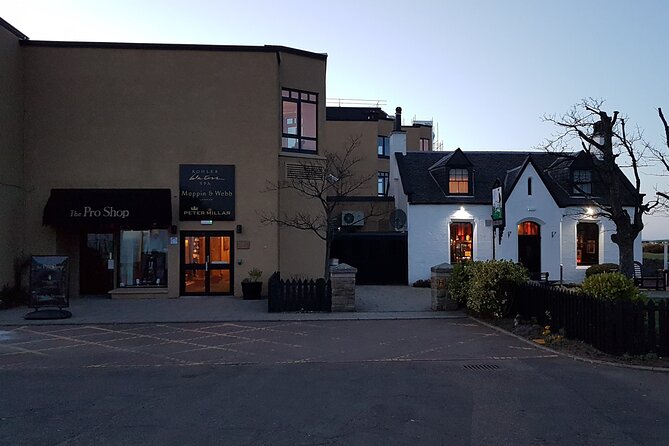
The walk finishes near the Road Hole, the famous 17th green, beside the Old Course Jigger Inn. The guide uses this final section to explain some of the dramatic moments associated with one of golf’s most recognizable holes.
The Road Hole has a strong reputation for difficult shots and memorable mistakes. Hearing about those moments while looking toward the 17th gives the stories a physical setting. You can see why the hole has such a strong place in championship golf without needing to play it yourself.
The official tour ends near the Jigger Inn, where you can stop for food and drinks beside the 17th fairway. Refreshments are not part of the $25 price, but this is a useful way to extend the outing. One guide also helped a group find fish and chips at the Jigger Inn, so ask Richard for practical suggestions if you want to stay nearby.
This ending is better than finishing in a car park or back at the starting point. You finish at a place tied directly to the Old Course, with time to look back over the route and watch the action around the 17th.
What the guide’s style means for you
Richard is the key part of this experience. His former caddie background gives him a direct connection to the Old Course, and he combines golf knowledge, town history, humor, and stories from his years around the course.
The strongest reports about the tour focus on his storytelling and ability to answer golf questions. He also takes photos for the group and may provide earbuds so you can hear him more clearly. Those details matter in an open, windy setting where a guide facing away from part of the group can be hard to follow.
There is a tradeoff. Some people find that Richard follows a set presentation and speaks too quickly. Others feel the amount of history packed into 75 minutes is impressive. If you prefer a loose conversation with frequent interruptions, you may need to make an effort to ask questions at a natural pause.
I would stand close to the guide, especially during the opening town section, and mention early if you are having trouble hearing. The group size is limited to 15, so this should be easier than on a large coach tour.
Who should book this Old Course tour?
This tour suits a golfer who wants more than a photograph outside the clubhouse. You will hear about course development, famous holes, caddies, Old Tom Morris, major events, and the practical details that shaped the Links.
It also works for a non-golfer. The town history, early development of the game, open views, and bridge photographs give you plenty to enjoy even if you cannot tell a birdie from a bunker. Several parts of the route focus on place and people rather than technical golf.
I would be more cautious if your group includes children under five, someone who cannot follow fluent spoken English, or anyone with limited mobility. The tour is not suitable for children under five, strollers, mobility aids, or certain recent injuries. There is also no place to leave golf clubs, strollers, or other equipment, so make arrangements before you arrive.
The tour is offered in English only. Service animals are allowed, and the starting point is near public transportation, but the route itself requires a moderate level of fitness.
Is $25 good value for 75 minutes?
For a short guided walk, $25 is fair value. You receive a professional local guide, a focused route, access to stories that would take time to research, and professional Swilcan Bridge photos when conditions allow.
The value is strongest if this is your first visit to St Andrews. You gain a basic map of the Old Course, learn why the town matters, and finish near the Jigger Inn. If you already know the course well, read extensively about its history, or want a long technical discussion about architecture, the set 75-minute format may feel brief.
You should also remember that the public can reach some of these areas independently when play allows. The fee pays for the interpretation. If you enjoy learning through local stories and want someone to point out the significance of what you are seeing, the cost is sensible. If you mainly want a bridge photograph, you may not need the full tour.
Free cancellation is available up to 24 hours before the start time. Cancellations made inside that window are not refunded, and changes are not accepted. The activity can also be canceled if the minimum group size is not met.
Should you book the St Andrews Old Course History Tour?
I would book it if you have a golfer in your group, are visiting St Andrews for the first time, or want the Old Course explained by someone with local caddie experience. The combination of golf history, town context, famous holes, and Swilcan Bridge photos gives you much more than a quick walk past the Links.
Book with three conditions in mind: arrive early at Hotel du Vin, bring warm waterproof clothing, and be ready for fast English. If you want a gentle, highly interactive conversation, Richard’s set pace may frustrate you. For most visitors who want the story behind the Home of Golf in a compact outing, this is a useful and well-priced introduction.
FAQ
How long does the St Andrews Old Course History Tour last?
The tour lasts approximately 1 hour and 15 minutes.
Where does the tour begin?
It begins outside Hotel du Vin St Andrews at 40 The Scores, St Andrews, KY16 9AS.
Where does the tour finish?
It finishes near the Road Hole, the 17th, by the Old Course Jigger Inn. Food and drinks at the Jigger Inn are not included.
Are photos at Swilcan Bridge included?
Yes. Professionally taken photos at Swilcan Bridge are included, except on tournament days such as the Open and Dunhill events.
Is the tour suitable for non-golfers?
Yes. The route includes the history of St Andrews, the early development of golf, famous locations, and stories that do not require you to be a golfer.
What language is the tour offered in?
The tour is offered in English, and all participants need a fluent command of English because the guide may speak quickly.
Just added around St Andrews
- The Original St Andrews Photo Shoot Tour★ 5.0 · 7 reviews
- St. Andrews Scenic Stroll: A Private Walking Exploration★ 5.0 · 6 reviews
- St Andrews Walking Tours★ 5.0 · 8 reviews
- A Wee Walk and a Cocktail in St. Andrews★ 4.0 · 7 reviews
- Barrel-top whisky tasting in St Andrews★ 5.0 · 20 reviews
- St Andrews History Tours★ 5.0 · 41 reviews
- Watch Building Experience – St Andrews★ 5.0 · 40 reviews
- Private St. Andrews Tour with Dedicated Local Guide★ 5.0 · 38 reviews
St Andrews Tours, compared.
St Andrews & the Fishing Villages of Fife Small-Group Day Tour from Edinburgh
Read our review →
St Andrews Must-Sees Daily Walking Tour (11am & 2pm)
Read our review →
St Andrews & Cliffs and Dunnottar Castle in Spanish.
Read our review →
St Andrews Tours: Town, Golf and Old Course History
Read our review →

St Andrews, Fife Coast Walk & Historic Abbey Tour from Edinburgh
Read our review →Browse the lists this tour appears in