
Reviewed · WALKING TOURS
Glasgow’s Music Mile Walking Tour
Glasgow’s Music Mile is not a museum trail. It is a walk through working streets, old theatre sites, music schools, bars, and venues where major bands played before they were famous. In about two hours, you follow the route from the Glasgow Royal Concert Hall to King Tut’s Wah-Wah Hut, with plenty of stories along the way.
I like the local focus and the stop at Nice ’n’ Sleazy, where the group can pause for a drink and hear tales of Glasgow’s club scene. I also like the guides’ personal connection to the subject. Fiona is a music journalist with 30 years in the field, while Felipe brings strong knowledge of Glasgow’s music past.
The main thing to consider is the route itself. It includes steep inclines and stairs, and the tour moves at a steady walking pace. The minimum age is 14, food and drinks cost extra, and access to the King Tut’s stage depends on what is possible that day.
In This Review
- Key points to know before you book
- Why Glasgow’s Music Mile makes a good city walk
- Starting at the Royal Glasgow Concert Hall
- The Pavilion Theatre and Glasgow’s stage traditions
- The Royal Conservatoire and Glasgow’s creative pipeline
- A proper pause at Nice ’n’ Sleazy
- Finishing at King Tut’s Wah-Wah Hut
- Guides who make the difference
- Who will enjoy this walk most
- Timing, group size, and practical value
- Is Glasgow’s Music Mile worth booking?
- FAQ
- Where does the Glasgow’s Music Mile Walking Tour start?
- What time does the tour begin?
- Where does the tour finish?
- How long does the walking tour last?
- Is food or drink included?
- Can children join the tour?
Key points to know before you book
- The route links five important music stops, beginning at the Glasgow Royal Concert Hall and ending at King Tut’s Wah-Wah Hut.
- Fiona and Felipe are named guides, with Fiona bringing decades of experience as a music journalist.
- Nice ’n’ Sleazy is more than a photo stop, since you can buy a drink there while hearing stories about the Apollo and Sauchiehall Street.
- King Tut’s may offer stage access, giving you a chance to stand under the lights where famous acts once played.
- The tour costs $27.06 per person and lasts about two hours, making it a reasonably priced introduction to Glasgow’s music scene.
- The group can reach up to 26 people, so the experience is social rather than private.
Why Glasgow’s Music Mile makes a good city walk
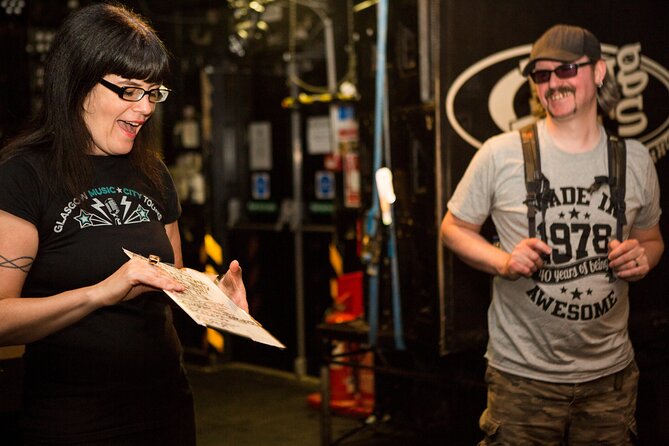
Glasgow’s musical identity is spread across ordinary-looking city blocks. The appeal of this tour is that it connects those places into one story. You are not simply being shown a famous building. You are hearing how theatres, cinemas, bars, concert halls, and streets helped shape the city’s sound.
The tour also gets you away from the usual sightseeing checklist. Glasgow has plenty of grand architecture and major cultural sights, but this walk points your attention toward the places where local audiences gathered at night. That gives you a better feel for the city as a place where music is part of daily life, not just a subject in a display case.
The two-hour length is well judged for a first look. You cover a lot of ground, but the walk is broken up by stops and stories. At $27.06, the price is fair if you care about music and want context you would not easily get by walking the route alone.
This is not the best choice if you want a quiet architecture tour or a concert performance. It is a talk-led experience, and much of its value comes from the guide’s storytelling. A strong guide can make the same streets feel full of backstage drama, changing fashions, and old local rivalries.
A few more Glasgow trips to weigh up
- Glasgow City Centre Walking Tour with Local Guide
★ 5.0 · 1,326 reviews - Glasgow Street Art Daily Walking Tour: 2pm
★ 5.0 · 648 reviews - Gander Walking Tours in Glasgow
★ 5.0 · 506 reviews
Starting at the Royal Glasgow Concert Hall
The tour begins at the Glasgow Royal Concert Hall on Killermont Street at 2:00 pm. This is a useful starting point because the building is tied to Celtic Connections, described as the world’s biggest winter music festival, and is home to the Royal Scottish National Orchestra.
The first stop also reaches back to the era of the old Empire Theatre. The Empire is gone, but its reputation remains part of Glasgow’s performing arts story. Its audience was known for being demanding and passionate, which tells you something about the city’s relationship with live entertainment. Glasgow audiences were not passive customers. They had opinions, and they were willing to show them.
You spend about 15 minutes here. There is no admission ticket included or needed for the stop, so you are hearing about the venue from outside rather than attending a performance. That keeps the tour moving, though anyone hoping to see the concert hall interior should plan a separate visit.
This opening section helps set the tone. Glasgow’s music story is not limited to rock bands. Orchestral music, folk traditions, theatre, popular song, and modern acts all belong to the same city story.
The Pavilion Theatre and Glasgow’s stage traditions
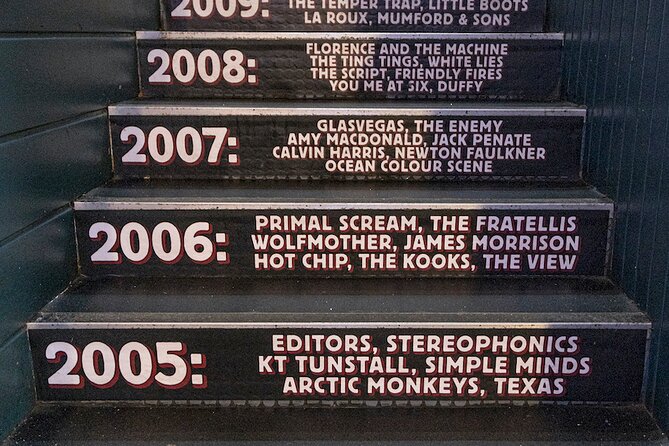
From the concert hall, the route continues to the Pavilion Theatre. This venue has hosted performers ranging from Houdini and Charlie Chaplin to Sydney Devine, a Scottish country music star known for his rhinestone cowboy image.
That mix is important. Glasgow’s entertainment history crosses neat genre lines. A walking tour focused only on guitar bands would miss the city’s theatre, variety, country, comedy, and cinema traditions. The Pavilion gives the guide a chance to show how those worlds overlapped.
You also hear about the former Odeon, once a cinema and a place where major bands appeared. The Beatles, Little Richard, and The Rolling Stones are linked to this part of the story. For music fans, those names are a strong reminder that Glasgow was not simply watching the British and American music scenes from a distance. Major performers came through the city, and local audiences helped create the atmosphere that made these shows memorable.
The stop lasts around 10 minutes. Expect a compact explanation rather than a long visit inside. The appeal lies in the stories attached to the buildings and the way the guide connects old entertainment venues to the wider Music Mile.
The Royal Conservatoire and Glasgow’s creative pipeline
The Royal Conservatoire of Scotland adds another layer to the walk. This is where the focus shifts from venues and famous performances to training and artistic work.
The guide brings in stories linked to actors from Outlander and Doctor Who, along with other performers who trained or worked in the conservatoire’s orbit. There is even a connection to Bob Dylan and the bagpipes, an amusing reminder that Glasgow’s musical links do not always follow the path you expect.
The stop takes about 10 minutes. You are not taking a class or entering for a formal tour. Instead, you get a quick look at the role of an arts school in producing performers across stage, screen, and music.
I find this part especially useful because it shows why Glasgow keeps producing creative talent. The city’s music culture is not only about famous bands who once played a venue. It also depends on rehearsal spaces, training institutions, local audiences, and places where young performers get their first chance.
The conservatoire section may appeal to you even if you are not a serious rock fan. Its stories broaden the tour and make it suitable for anyone interested in theatre, television, film, or Scottish performing arts.
Same glens and lochs, a completely different day out:
- Guided Celtic Park Stadium Tour
★ 5.0 · 3,136 reviews - City Sightseeing Glasgow Hop-On Hop-Off Bus Tour
★ 4.5 · 1,873 reviews - Oban, Glencoe, Highlands Lochs & Castles Small Group Day Tour from Glasgow
★ 5.0 · 1,432 reviews - Loch Ness & the Highlands Day Tour from Glasgow Including Cruise
★ 5.0 · 1,211 reviews
A proper pause at Nice ’n’ Sleazy
Nice ’n’ Sleazy is the most relaxed stop on the route. The bar has a reputation for supporting young talent, and the tour pauses here for about 20 minutes. You can buy a drink, sit for a moment, and listen to stories about Glasgow’s music clubs.
This stop adds something the other locations cannot. You are not just looking at the outside of a former venue. You are entering a current local haunt that still plays a role in the city’s music life. It is a practical break, too. After walking through central Glasgow, a short pause can make the rest of the route easier.
The conversation here includes the Apollo, the much-loved venue that has disappeared, and the changing sounds of Sauchiehall Street. That street has long been part of Glasgow’s nightlife, and its story helps explain how musical tastes and night-time habits have shifted over the decades.
The Apollo section is likely to be a highlight for anyone interested in live rock. The venue hosted major acts, and its loss is part of the emotional story of Glasgow’s music scene. At Nice ’n’ Sleazy, the guide can place those old concerts alongside the smaller clubs that supported newer bands.
Drinks are not included, so bring a card or some cash if you want to buy one. You do not need to drink to enjoy the stop, but the bar setting is central to its character. This is not a formal lecture room. It is a chance to hear music stories in a place that still feels connected to the local scene.
Finishing at King Tut’s Wah-Wah Hut
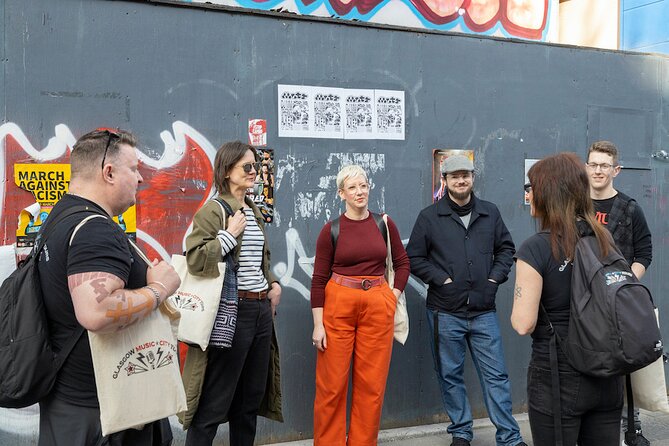
The walk ends at King Tut’s Wah-Wah Hut on St Vincent Street. This venue is closely linked to the early careers of Oasis, Blur, and the Manic Street Preachers. It is one of the strongest final stops because it brings the story right into a working music venue.
The idea is simple and effective. You hear how well-known acts played small rooms before becoming household names, then finish in one of the places where that process happened. Depending on access, you may be able to go upstairs, stand beneath the stage lights, and take a photo on the stage.
That access is not guaranteed, so treat it as a welcome possibility rather than part of the fixed promise. Venue schedules and operating conditions can affect what you can see. Even without stage access, the stop gives the tour a satisfying ending because King Tut’s remains tied to emerging music.
The guide also connects the venue with acts such as The Killers and other major performers who played there before reaching larger stages. For music fans who grew up with 1980s or 1990s bands, this part may have the strongest emotional pull. The route turns names from old records into places on a Glasgow street.
Guides who make the difference
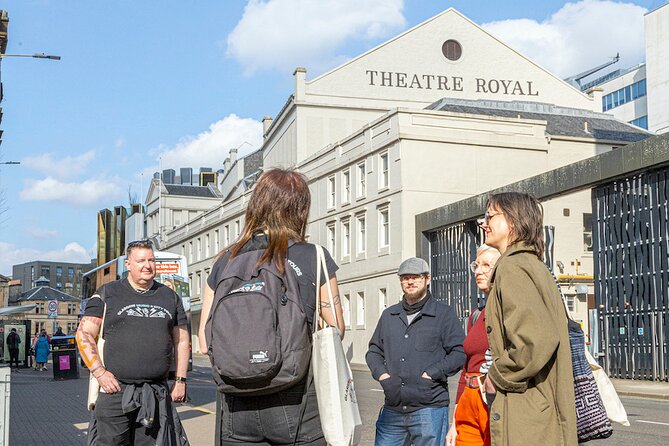
The tour depends heavily on the person leading it. Fiona is a particularly strong fit for anyone who wants detailed stories about bands, venues, and Glasgow’s local scene. Her background as a music journalist gives her a useful connection to the subject, especially when discussing older shows and the changing club culture.
Felipe is also named as a guide, with a strong grasp of Glasgow music history. The tone can vary depending on who leads your walk, but the format allows room for personal stories and questions.
One pleasant feature is that people with memories of Glasgow’s earlier music years may add their own experiences. That can give the walk a more personal feel, though it also means the amount of conversation may vary from one group to another. If you prefer a tightly scripted tour with no side stories, this may feel a little loose. If you enjoy local voices and extra anecdotes, it is a strength.
The guide’s role is not simply to recite dates. The best parts explain why a venue mattered, what kind of audience it attracted, and how one generation of performers made room for the next.
Who will enjoy this walk most
This tour is an obvious match for rock and pop fans, especially if you like The Beatles, The Rolling Stones, Oasis, Blur, The Killers, Depeche Mode, The Vaselines, Ultravox, or Lou Reed. Fans of 1970s, 1980s, and 1990s music should find plenty of familiar names.
You do not need to know every band to enjoy it. The tour also covers theatre, country music, classical performance, cinema, television, and arts training. I would recommend it to anyone who wants a different view of Glasgow and prefers local culture to a standard list of major sights.
The age limit is 14 because of licensing laws, so this is not a family outing for younger children. Most people can take part, but the steep slopes and stairs matter. Contact Glasgow Music City Tours before booking if you have mobility concerns.
Wear comfortable shoes and clothing suited to the weather. Glasgow can be wet, and this is an outdoor walking experience with stops inside venues rather than a fully indoor tour.
Timing, group size, and practical value
The tour starts at 2:00 pm outside the Glasgow Royal Concert Hall and ends at King Tut’s Wah-Wah Hut. That makes it easy to pair with another central Glasgow activity before or after, but you should leave enough time to reach the start point without rushing.
The group can include up to 26 people. That is not a private walk, but it is still a manageable size for a guide-led city tour. A larger group may make it harder to hear in noisy streets or crowded venues, so staying near the guide is sensible.
The tour is usually booked about 29 days ahead. That does not mean you must reserve a month early every time, but it suggests that planning ahead is wise, especially if your Glasgow dates are fixed.
The price is $27.06 per person. Since the tour lasts about two hours and includes a guide with specialist knowledge, I see it as good value for music fans. You are paying for access to stories, local context, and a route that would be hard to shape on your own. You are not paying for food, drinks, concert tickets, or guaranteed stage access at King Tut’s.
You receive confirmation when booking, and a mobile ticket is provided. The tour is offered in English, and service animals are allowed. Public transport is nearby, which is useful for reaching the start and leaving from the end.
Free cancellation is available if you cancel at least 24 hours before the local start time. Changes or cancellations made inside that window are not accepted for a refund.
Is Glasgow’s Music Mile worth booking?
Book this tour if you want Glasgow’s music story told through real streets and venues rather than through a standard museum display. The combination of the Royal Concert Hall, the Pavilion, the conservatoire, Nice ’n’ Sleazy, and King Tut’s gives you a broad look at the city’s performing arts.
I would especially choose it if you like music from the 1970s through the 1990s, enjoy venue history, or want a local guide with strong personal knowledge. Fiona’s journalism background and Felipe’s music expertise add real value.
Skip it if steep streets and stairs are a serious problem, if you want a private tour, or if you are looking for a performance rather than a conversation. For everyone else, $27.06 buys a lively two-hour introduction to the places that helped Glasgow earn its musical reputation.
FAQ
Where does the Glasgow’s Music Mile Walking Tour start?
The tour starts at the Glasgow Royal Concert Hall, 2 Killermont Street, Glasgow G2 3NW.
What time does the tour begin?
The tour begins at 2:00 pm.
Where does the tour finish?
The tour finishes at King Tut’s Wah-Wah Hut, 272A St Vincent Street, Glasgow G2 5RL.
How long does the walking tour last?
The tour lasts approximately two hours.
Is food or drink included?
No. Food and drinks are not included, although you have the opportunity to buy a drink during the stop at Nice ’n’ Sleazy.
Can children join the tour?
The minimum age is 14 because of licensing laws.
Just added around Glasgow
- Private Tour of Glasgow Distilleries and a Loch Lomond Cruise★ 5.0 · 13 reviews
- West of Scotland Cultural Tour★ 5.0 · 7 reviews
- Ultimate Day tour Edinburgh: Glencoe, Highland Cows, Loch Lomond★ 5.0 · 10 reviews
- The Braveheart tour from Glasgow or Edinburgh★ 5.0 · 6 reviews
- Scottish Highlands, Lochs & Castles from Edinburgh and Glasgow★ 5.0 · 6 reviews
- The Scottish Highlands Photography Tour & Workshop★ 5.0 · 3 reviews
- Shore Excursion to Loch Lomond & Stirling Castle★ 5.0 · 10 reviews
- Stuck in the 90s A Nostalgic Music Experience★ 5.0 · 22 reviews
Walking Tours, compared.
Underground Vaults Walking Tour in Edinburgh Old Town
Read our review →
Edinburgh Castle: Guided Walking Tour with Entry Ticket
Read our review →
Edinburgh Castle Guided Walking Tour in English
Read our review →
Edinburgh Darkside Walking Tour: Mysteries, Murder and Legends
Read our review →
Old Town Walking Tour History and Tales in Edinburgh
Read our review →
Haunted Vaults and Graveyard Walking Tour in Edinburgh
Read our review →Browse the lists this tour appears in