
Reviewed · HISTORICAL TOURS
The Magnificent and Mysterious History of Glasgow
Glasgow reveals itself through its contradictions: grand marble civic buildings, grim medical history, proud merchants, rebellious statues, old churches, street art, and a traffic cone perched on the Duke of Wellington. This walking tour ties those pieces together while helping you get your bearings in central Glasgow.
I like the wide range of stops, from George Square and the City Chambers to the Britannia Panopticon and Glasgow Cathedral. I also like the guides’ storytelling style, especially Bruce and Henry Bell, who bring in sharp local facts, Robert Burns, St. Mungo, and the city’s more scandalous past. The main drawback is pace: you cover a great deal in roughly two to two and a half hours, and a few people may find the stop-by-stop format less connected than a more thematic tour.
In This Review
- Key points to know before you book
- Why this Glasgow walk works as a first look
- From merchant wealth to Glasgow’s public face
- Old trades, candle makers, and the Merchant City
- Saints, markets, and the old commercial core
- Music halls, public announcements, and Glasgow humor
- St. Mungo, medicine, and Glasgow Cathedral
- What the pace and group size feel like
- Is $17.91 a good value?
- Who should take this tour?
- Should you book The Magnificent and Mysterious History of Glasgow?
- FAQ
- Where does the Glasgow walking tour begin?
- Where does the tour finish?
- How long does the tour last?
- Is Glasgow Cathedral included?
- Is the tour suitable in poor weather?
- Can I cancel for a refund?
Key points to know before you book
- A fast introduction to central Glasgow: You move from George Square through Merchant City, Trongate, High Street, and the cathedral quarter.
- The stories are often better than the buildings: Expect tales of merchants, old trades, medical work, religion, war, public scandal, and Glasgow’s comic streak.
- Guides matter here: Bruce and Henry Bell have been especially effective at mixing facts with humor and local detail.
- Allow extra time: The advertised duration is about two hours, but walking between stops can add time, with the full outing sometimes lasting up to two hours and 45 minutes.
- You see Glasgow’s odd side too: The cone-topped Wellington statue, a famous pizza shop, an old music hall, murals, and a medieval market cross keep the walk from feeling solemn.
- The finish is not at the start: You begin near George Square and finish on Ingram Street, close to the Ramshorn Church.
Why this Glasgow walk works as a first look
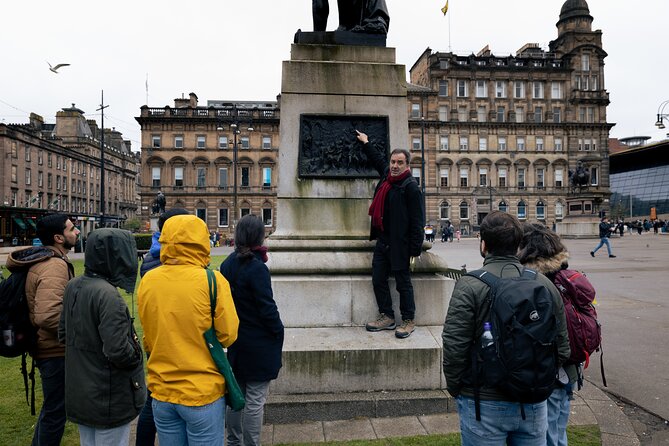
The tour begins at George House on George Square, a useful place to start because Glasgow’s civic, literary, political, and commercial stories meet here. The square can feel like a collection of statues and grand facades until a guide explains why those figures were placed there and what they say about the city.
The first part sets up Glasgow’s self-image. The City Chambers, headquarters of Glasgow City Council, is the architectural heavyweight. Its sculpture and decoration offer a clear glimpse of how prosperous nineteenth-century Glasgow wanted to present itself: powerful, cultured, confident, and not shy about showing off.
Nearby, the Glasgow War Memorial shifts the mood. It honors citizens killed in the First World War and marks a major change in the city’s story. The contrast is useful. Glasgow’s public buildings celebrate wealth and civic pride, while the memorial points toward the human cost of industrial and military power.
George Square also gives you the Sir Walter Scott statue, the centerpiece of the space. Scott helped shape the modern public idea of Scotland, so this is more than a writer’s monument. The Robert Burns statue adds a different note. It was the first monument to Scotland’s national poet, funded by thousands of small contributions, some as low as five pence. About 30,000 people attended its unveiling.
A guide may even recite Burns beside the statue. That small performance helps explain why Burns remains more than a name on a pedestal. It also gives the square a bit of character before the walk moves into Glasgow’s commercial center.
One practical warning: George Square has had construction and access problems. A section of the early route may be altered, and a church visit can be blocked by a private service. The guide can still explain the site, but you should not book this walk solely for guaranteed interior access to every building.
A few more Glasgow trips to weigh up
- Glasgow: Pubs & History Walking Tour with Beer Tasting
★ 5.0 · 81 reviews - West of Scotland Cultural Tour
★ 5.0 · 7 reviews - Old Town Walking Tour History and Tales in Edinburgh
★ 5.0 · 2,168 reviews
From merchant wealth to Glasgow’s public face
The tour then turns toward the Merchant City, where the city’s business history becomes easier to read in the streets and buildings. The Merchant’s House represents the men who helped make Glasgow wealthy and powerful. Their success came through trade and commerce, and the building gives you an idea of how important they believed themselves to be.
This is one of the tour’s useful threads: Glasgow did not grow by accident. Its merchants shaped the city’s buildings, institutions, public image, and charitable works. The story becomes more complicated when you consider the links between Glasgow’s fortunes and the slave trade, alongside later civic positions against apartheid. The walk raises the city’s uneasy moral contradictions, though the amount of time spent on each issue depends on the guide.
The Gallery of Modern Art adds another layer. It began as a grand private mansion and later served several purposes before becoming an art gallery. The building helps you see how central Glasgow’s cultural life is to its identity, even when the subject is not old architecture.
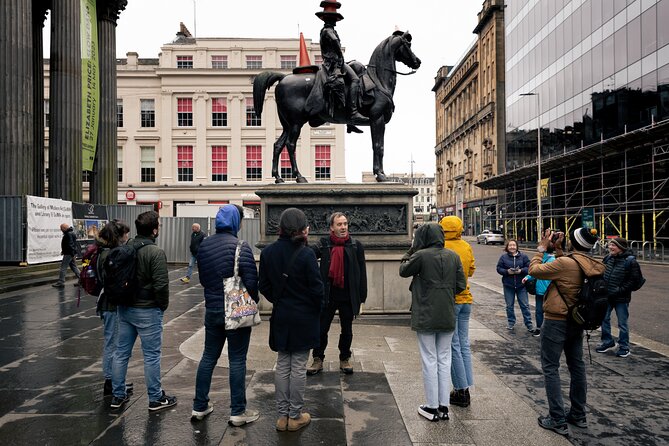
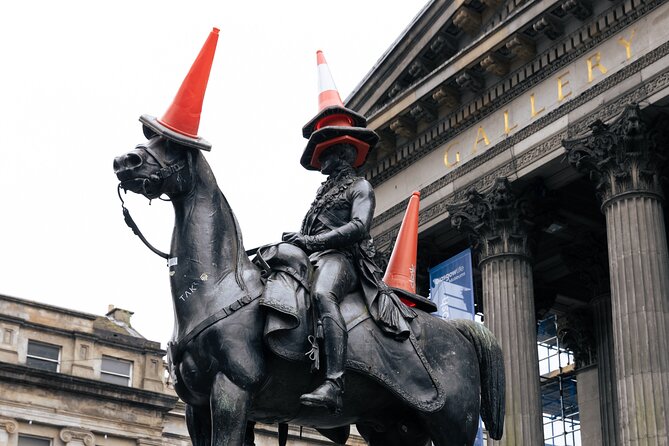
Then comes one of Glasgow’s best-known comic sights: the Duke of Wellington statue, usually recognized by the traffic cone placed on his head. Wellington was a decorated military leader and former prime minister, but the modern joke has become more famous than the formal monument.
That stop captures something important about Glasgow’s personality. The city can honor power while also making fun of it. The cone is not just a photo opportunity. It is a quick way to understand the local taste for mischief and anti-establishment humor.
The Paesano Pizza stop keeps that tone alive. You do not stop for a meal, but the popular pizza restaurant has a memorable connection to a very unusual job opportunity. It is a brief pause, yet it helps the route feel connected to present-day Glasgow rather than trapped in the past.
Old trades, candle makers, and the Merchant City
The route continues through streets shaped by older trades. The Trades Hall of Glasgow recalls the carpenters, tanners, dyers, and other working groups who organized through the Trades House. The institution also supported members who had grown too old to work, offering a glimpse of how welfare operated before modern public systems.
This stop balances the merchant story. The rich businessmen of Glasgow are only part of the picture. Skilled trades and working associations also helped form the city, and the Trades Hall shows how people protected their own communities.
You also pass an eighteenth-century Georgian townhouse with a story connected to the family who lived there. The supplied route does not identify the house by name, so treat it as a quick architectural and social-history stop rather than a promised interior visit.
Another old street recalls the candle makers, who lived and worked apart from the medieval town to lower the risk of fire. Later, the area became a place for markets and warehouses. Today, it forms part of Glasgow’s cultural district. This change from trade and risk to arts and entertainment is one of the clearest examples of the city reusing its past.
The Corinthian Club continues that pattern. The building has served as a bank, courthouse, and county building. It is now a high-profile club and wedding venue. You will mainly view it from outside, but the changing uses tell you how Glasgow’s grand commercial buildings have survived by adapting.
Saints, markets, and the old commercial core
The Saints of Ingram stop brings religion and charitable work into the story. Along with the original Merchants House and Trades House, Hutchesons’ Hospital was once described as one of Glasgow’s three graces. Together, these institutions cared for many local people for generations.
The tour does not present Glasgow as a city built only by wealthy traders. It also shows how those traders tried to shape public life through hospitals, aid, and religious institutions. That does not erase the darker parts of the commercial story, but it gives you more to think about.
At the City Halls and Old Fruitmarket, you see a surviving piece of commercial Glasgow. The Old Fruitmarket once handled produce and trade. It has since been converted for retail use, but you can still walk through the structure and picture its earlier purpose.
This is the sort of stop that works best when you pay attention to scale and layout. The building’s survival lets you connect an ordinary shopping area with the economic life that once filled it. It is not a grand monument in the usual sense, but it helps explain how the city worked day to day.
Trongate 103 brings you into Glasgow’s current arts scene. The arts center includes the Sharmanka Kinetic Gallery, among other attractions. The tour may not allow time for a full visit, but the stop shows how old commercial areas have found new cultural uses.
Same glens and lochs, a completely different day out:
- Guided Celtic Park Stadium Tour
★ 5.0 · 3,136 reviews - City Sightseeing Glasgow Hop-On Hop-Off Bus Tour
★ 4.5 · 1,873 reviews - Oban, Glencoe, Highlands Lochs & Castles Small Group Day Tour from Glasgow
★ 5.0 · 1,432 reviews - Glasgow City Centre Walking Tour with Local Guide
★ 5.0 · 1,326 reviews
Music halls, public announcements, and Glasgow humor
The Britannia Panopticon Music Hall is one of the route’s most distinctive stops. It is the world’s oldest surviving music hall, and a young Stan Laurel performed there before becoming one half of the famous comedy duo Laurel and Hardy.
This is a fine example of the tour’s range. In a few minutes, you move from civic monuments and merchants to popular entertainment and working-class culture. The building also helps explain why Glasgow’s history cannot be told only through city leaders and grand institutions.
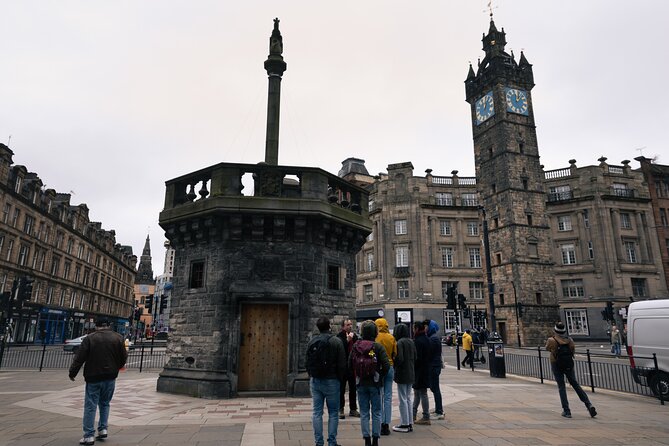
Mercat Cross offers a different kind of public theater. The present structure recreates a medieval market cross, where official proclamations were made. Before newspapers, radio, or social media, this was where people heard important announcements.
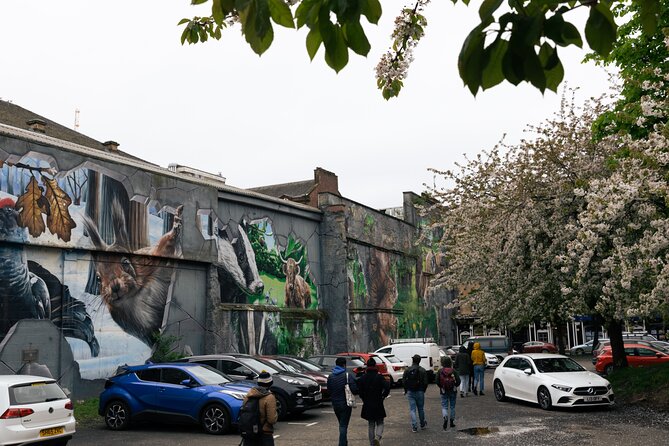
From there, the walk reaches High Street, once the heart of medieval Glasgow. This is one of the longer stops, at about 15 minutes, and it brings together several strands of the city’s past. You may hear about the site of the old University, one of the four oldest universities in Britain, as well as buildings and murals linked to St. Mungo.
The High Street is also where the route begins to feel more openly connected to Glasgow’s patron saint. The murals add a modern, colorful layer to a street with medieval roots. If you care about street art, pay close attention here. Several people have found the murals among the most enjoyable parts of the walk.
St. Mungo, medicine, and Glasgow Cathedral
The David Livingstone statue honors one of Scotland’s major explorers. It originally stood in George Square, so its current position also reflects how Glasgow has rearranged and reinterpreted its public monuments over time.
The Ramshorn Theatre occupies a building opened in 1824, replacing an earlier church on the site. Many important Glaswegians were buried there. In more recent years, the building has served as a theater and now houses language studies connected with the University of Strathclyde.
This is a useful stop for seeing how one building can pass through several phases of city life: church, burial place, theater, and education center. You should expect an exterior explanation rather than a long interior visit.
The Friends of Glasgow Royal Infirmary Museum recalls Glasgow’s medical past. It is connected with the city’s oldest hospital, where many medical advances were pioneered. The stop is short, but it adds an important human side to the tour. Glasgow’s story includes disease, treatment, hospitals, and practical innovation, not just commerce and architecture.
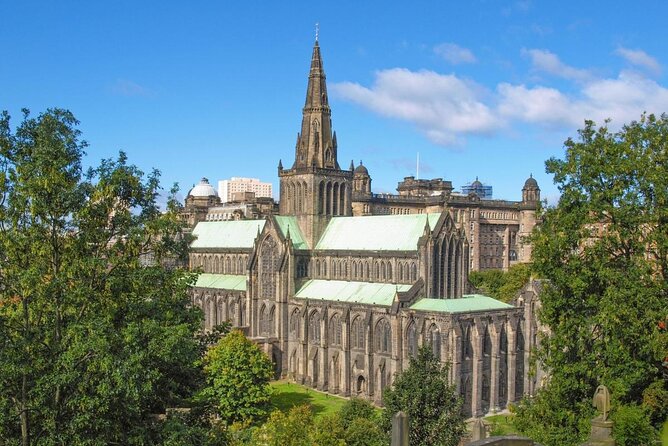
The main finish is Glasgow Cathedral, the oldest building in Glasgow. The present cathedral dates to the thirteenth century, while a church has occupied the site since the sixth century. The tour includes a look inside, although access can be affected by services or other closures.
Give the cathedral your full attention. After the rapid succession of statues, streets, and facades, twenty minutes here offers a quieter change of pace. The building connects Glasgow to its earliest Christian story and to St. Mungo, whose name appears repeatedly in the city’s identity.
The final nearby stops are Provand’s Lordship and the St. Mungo Museum of Religious Life and Art. Provand’s Lordship is one of Glasgow’s oldest buildings after the cathedral, dating to the fourteenth century. The museum was designed to look older than it is and presents examples of religious life and art from several faiths.
These stops make a good ending because they bring together the city’s oldest buildings, its religious traditions, and its modern interest in presenting different beliefs. The tour ends outside the Ramshorn Church on Ingram Street, at 98 Ingram Street, rather than returning to George Square.
What the pace and group size feel like
The route includes around 40 to 45 minutes of walking between the main attractions. That walking time is not empty. The guide continues talking, pointing out buildings, streets, murals, and small details as the group moves.
The advertised duration is roughly two hours and four to 14 minutes, but the additional information allows for as much as two hours and 45 minutes. Plan around the longer figure. One session ran about 30 minutes over schedule after a delay, so do not place an important timed booking immediately afterward.
The group limit is 15 people, which is fairly manageable for a city walk. Still, hearing can become difficult when the group spreads out or stands near traffic. One person found a smaller group easier, so stay close to the guide and speak up if you miss a point.
The pace has generally been quick but comfortable. That suits you if you want to see a lot in one outing. It may feel rushed if you prefer long pauses, museum interiors, or detailed architectural study.
Guides have a noticeable effect on the experience. Bruce has been praised for humor, local facts, and clear explanations, while Henry Bell has been especially effective at making the material entertaining and direct. The tour works best when the guide links the stops into a larger story rather than simply naming each building.
Is $17.91 a good value?
At $17.91 per person, the tour offers strong value if your goal is orientation. You get more than 20 points of interest, a long central route, local stories, and a cathedral visit for less than the cost of many short guided walks.
The value is not in spending a long time inside each attraction. Most stops last between one and five minutes, with longer explanations at the City Chambers, Trongate, High Street, and cathedral. Think of the walk as a broad introduction that helps you decide where to return later.
You also avoid paying admission at the listed stops, though that does not mean every building is open for a full visit. The price mainly pays for the guide’s time, route planning, and interpretation.
Who should take this tour?
I would choose this for a first visit to Glasgow, especially if you are staying around Merchant City. It gives you a practical map of the center and points you toward places worth a second look.
It suits you if you enjoy:
- Architecture and civic buildings
- Stories about merchants, religion, medicine, and old trades
- Glasgow’s darker or stranger anecdotes
- Street murals and present-day arts spaces
- A brisk walk with frequent short stops
- Guides who use humor and local knowledge
You may want a different format if you dislike long walking tours, need guaranteed indoor access, or prefer one subject explored in great detail. It can also feel too long for anyone who mainly wants George Square and its statues.
Wear comfortable shoes and bring rain protection. The tour runs outdoors, and poor weather can lead to a change of date or a refund. Service animals are allowed, public transport is nearby, and most people can take part, but the walk still requires steady movement for more than two hours.
Should you book The Magnificent and Mysterious History of Glasgow?
Book it if you want a lively first look at Glasgow that mixes major sights with odd details: Burns funding, candle makers, old hospitals, a cone-topped duke, a music hall linked to Stan Laurel, and St. Mungo’s lasting presence.
Skip it if you want a slow architecture seminar or a guaranteed visit inside every building. The route covers a lot, and construction or private services may change the opening section. For most first-time visitors, though, the low price, central route, and strong guide-led storytelling make this a sensible way to begin exploring Glasgow.
FAQ
Where does the Glasgow walking tour begin?
It begins at George House, 50 George Square, Glasgow G2 1EH, near George Square.
Where does the tour finish?
It finishes outside the Ramshorn Church on Ingram Street at 98 Ingram Street, Glasgow G1 1EX. This is not the same place as the starting point, though it is not far from George Square.
How long does the tour last?
The listed duration is approximately two hours and four minutes to two hours and 14 minutes. Walking time between attractions is about 40 to 45 minutes, and the full outing may last up to two hours and 45 minutes.
Is Glasgow Cathedral included?
Yes. The route finishes with a look inside Glasgow Cathedral, subject to access. A private service or other closure may prevent entry on a particular day.
Is the tour suitable in poor weather?
The experience requires good weather. If it is canceled because of poor weather, you can receive a different date or a full refund.
Can I cancel for a refund?
You can cancel up to 24 hours before the start time for a full refund. Cancellations or changes made less than 24 hours before the start time are not accepted for a refund.
Just added around Glasgow
- Private Tour of Glasgow Distilleries and a Loch Lomond Cruise★ 5.0 · 13 reviews
- West of Scotland Cultural Tour★ 5.0 · 7 reviews
- The Braveheart tour from Glasgow or Edinburgh★ 5.0 · 6 reviews
- Ultimate Day tour Edinburgh: Glencoe, Highland Cows, Loch Lomond★ 5.0 · 10 reviews
- Scottish Highlands, Lochs & Castles from Edinburgh and Glasgow★ 5.0 · 6 reviews
- Shore Excursion to Loch Lomond & Stirling Castle★ 5.0 · 10 reviews
- The Scottish Highlands Photography Tour & Workshop★ 5.0 · 3 reviews
- Stuck in the 90s A Nostalgic Music Experience★ 5.0 · 22 reviews
Historical Tours, compared.
Old Town Walking Tour History and Tales in Edinburgh
Read our review →
Multi-Sensory Small-Group Historic Vaults Tour in Edinburgh
Read our review →
Edinburgh Old Town: Historical Guided Walking Tour
Read our review →
Browse the lists this tour appears in