
Reviewed · SELF-GUIDED TOURS
Glasgow Private Self-Guided Tour
Glasgow’s story unfolds well on foot, from the 800-year-old cathedral and grand Necropolis to sharp modern murals and the shopping streets of today. This self-guided route gives you that broad sweep without tying you to a group or a fixed departure time.
I like the mix of serious history and odd little city details, especially the St. Enoch mural, the old Ramshorn graveyard, and Glasgow’s famous sense of humor. I also like the low price, $12.37 per person, and the three weeks of access, which lets you pause for lunch, museums, or a dram.
The catch is the app. Audio does not always begin on its own, and you may need to move between the tour and map screens. Some users also found the narration quiet. This is best for someone happy to manage a phone while walking, not someone expecting a live guide.
In This Review
- Key points about Glasgow’s self-guided walk
- Starting at Glasgow Cathedral and the Necropolis
- Provand’s Lordship and Glasgow’s medieval corner
- Glasgow’s murals and the University of Strathclyde
- Tron Theatre, the police museum, and Merchant City clues
- Ramshorn, tobacco wealth, and 98 Ingram Street
- George Square, City Chambers, and Glasgow’s public face
- Buchanan Street and the walk to St Enoch
- What the $12.37 price really buys you
- App handling, audio, and practical walking advice
- Who should book this Glasgow walk?
- Should you book the Glasgow Private Self-Guided Tour?
- FAQ
- How much does the Glasgow Private Self-Guided Tour cost?
- How long does the tour take?
- Where does the tour begin?
- Where does the tour finish?
- Is there a live guide?
- What language is available?
- What does the app include?
- Do I need to download an app?
- Are entrance fees included?
Key points about Glasgow’s self-guided walk
- Cathedral to city center: Begin at Glasgow Cathedral and finish near St Enoch Subway Station, covering the city’s medieval core and modern center.
- Free landmark access: The stated stops carry no admission charge, though separate attraction entry is not included if you choose to go inside places along the way.
- History meets street art: The route includes the Necropolis, old churches, civic buildings, and several major Glasgow murals.
- Narrated by Alex: The app includes recorded audio, photos, videos, directions, GPS, and recommendations, with Katie also associated with the historical narration in the experience materials.
- Flexible timing: The planned walk takes about two to three hours, but you can stretch it to around five hours with food, drinks, and extra stops.
- Private without a live guide: Only your group uses the tour, but you guide yourselves through the streets.
Starting at Glasgow Cathedral and the Necropolis
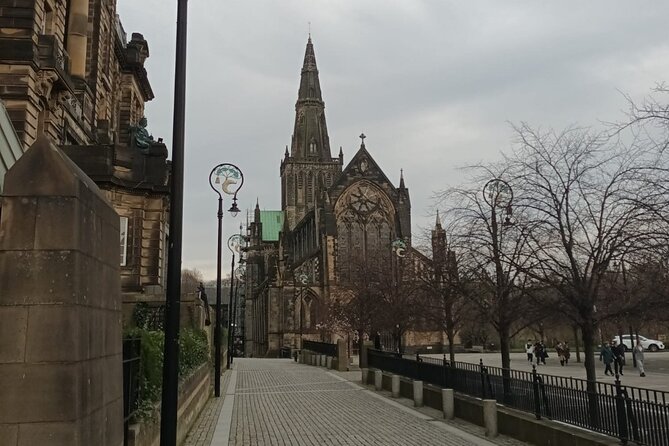
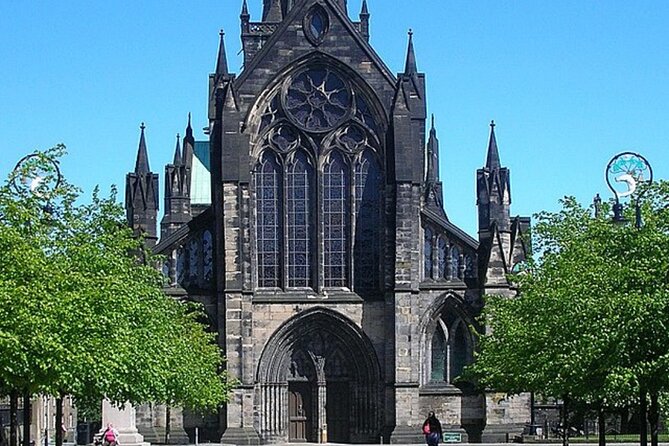
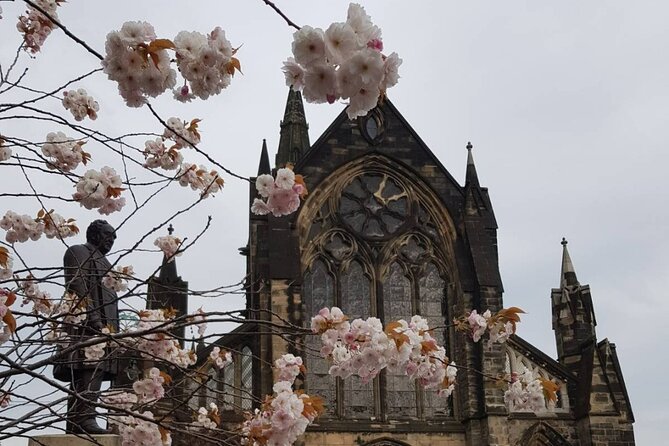
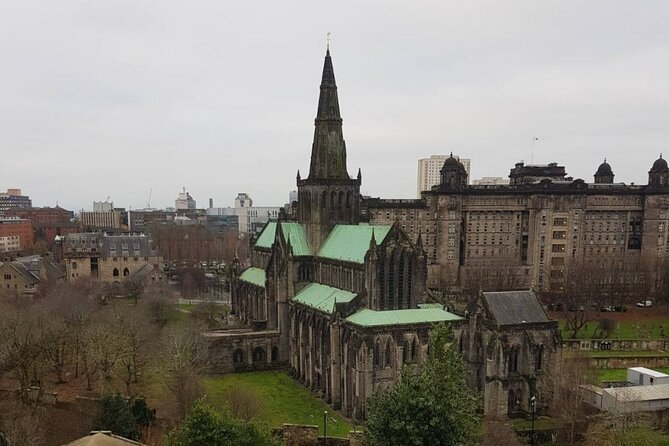
The walk begins at Glasgow Cathedral on Castle Street, a strong place to start because it gives you the city’s oldest feel right away. The present cathedral dates from 1197, after the first building was destroyed by fire soon after its construction in 1136. It has remained roofed for more than 800 years, an unusually long run for a medieval church.
Allow about 30 minutes here. The cathedral is not just a quick photo stop. Its age gives the rest of the route a useful starting point, since you can later watch Glasgow shift from religious center to commercial city and then to a modern arts city.
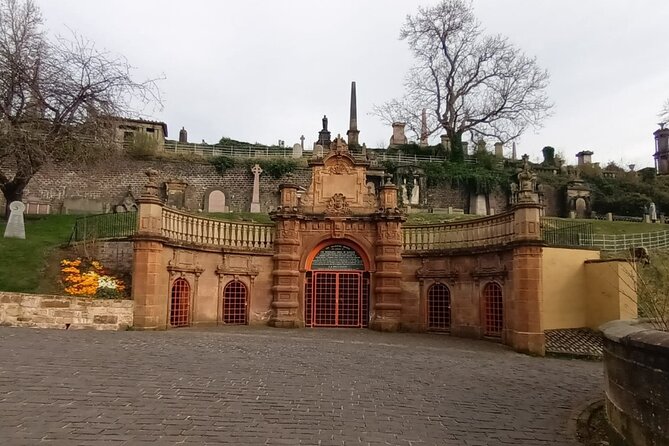
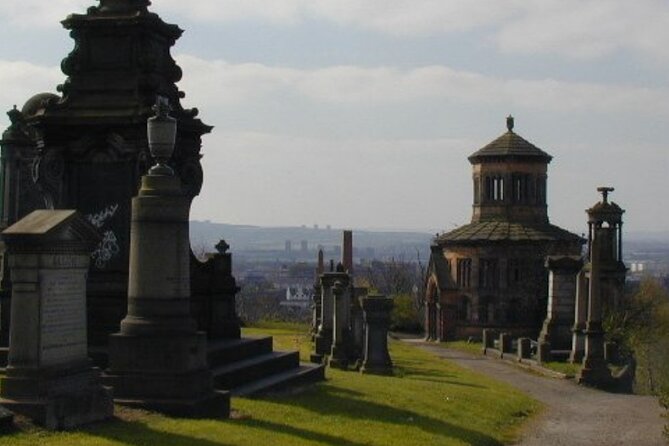
The next stop is the Glasgow Necropolis, a 37-acre cemetery on the hill beside the cathedral. It was founded in 1831 and modeled on Paris’s Père Lachaise. The setting was designed to impress, reflecting the wealth and ambition of Glasgow’s nineteenth-century merchants.
The route allows about 15 minutes at the Necropolis, which is enough for an introduction and a look around, but not enough for every path and monument. If you care about cemetery architecture or family history, plan extra time. The self-guided format helps here because you can pause the narration and continue at your own speed.
The climb and uneven outdoor ground may matter to some people, though the supplied information says most people can take part. You will also want sensible shoes. This is a walking tour through a real city, not a vehicle sightseeing circuit.
A few more Glasgow trips to weigh up
- Glasgow Ghost Hunt: The Soul That Got Away Exploration Game
★ 4.0 · 71 reviews - Cycle To Loch Ness – Self Guided
★ 5.0 · 119 reviews - Harry Potter’s Edinburgh: A Self-Guided Audio Tour
★ 4.5 · 42 reviews
Provand’s Lordship and Glasgow’s medieval corner
The route continues toward Provand’s Lordship, a stone building once known as the Hospital of St Nicholas. Its later name dates from the late nineteenth century, while the building itself reaches back much further.
The stop descriptions also point toward a building first recorded in 1626. It served at different times as the Town Clerk’s office, Justice Court, Town Council, and, at the top, a jail. That detail gives you a useful way to read old Glasgow: buildings changed jobs as the city grew, and practical needs often shaped their later form.
These short stops are not grand attractions in the same way as the cathedral. Their value is in the links between them. The audio explains how Glasgow’s buildings changed over time, so you are not simply collecting façades. You are seeing how civic, religious, and legal life shared a compact part of the city.
Keep an eye on the app’s map at this stage. One weakness is that the narration may not always guide you clearly to the next stop. You may need to stop walking, check the GPS route, and return to the audio. That is manageable, but it takes attention away from the streets.
Glasgow’s murals and the University of Strathclyde
Glasgow has made public art part of its city identity, and this route gives murals a proper place rather than treating them as decoration between older sights. The murals were created in part to revive neglected walls and gable ends and to shift public attitudes toward street art.
At the University of Strathclyde, you get a mix of university architecture and mural art. The stop is planned for about 15 minutes. It is a compact visit, but it adds a different side of Glasgow to the cathedral and cemetery.
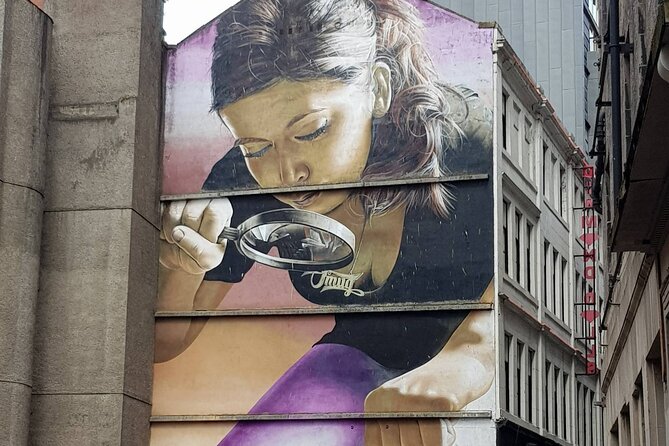
The St Enoch cradling St Mungo mural is a particularly good short stop. It shows a mother holding a baby, with the baby presented as a futuristic version of St Mungo. The audio explains the details of the image and the saint behind it. You only get about five minutes here, so pause if you want time to study the painting.
Another mural, Fellow Residents of Glasgow, was painted by Smug. It shows a hiker gathering mushrooms in woodland, with animals from Glasgow’s parks and green spaces appearing through shapes that look like holes in a wall. The fairy-tale style is easy to appreciate, but the subject also makes a point about the city’s relationship with its public parks.
The final mural is Honey, I shrunk the Kids, described as photo-realistic street art. Together, the murals make the walk feel current. You are not being asked to choose between old Glasgow and new Glasgow. The route puts both on the same map.
Tron Theatre, the police museum, and Merchant City clues
The walk passes the tower of the former Tron Church, now the Tron Theatre. Trongate was once called Saint Thenew’s Gait, referring to the route toward the supposed burial place of Thenew, better known today as Saint Enoch. This is one of the route’s better examples of local names carrying old stories into modern streets.
You also pass the building connected with the fifteenth-century section of the city. Its first official record dates to 1626, and its former roles included town administration, court work, council business, and a jail high in the building for security. The audio uses this place to show how Glasgow’s civic life changed across the centuries.
The City of Glasgow Police Museum adds another layer. Glasgow had the first police force in Great Britain, and the museum covers its history from 1800 to 1975. You may not have time to enter every attraction on a two-hour walk, but the route gives you the context and points out where the city’s institutions fit into the story.
Merchant City brings in Glasgow’s trading past. At one point, you see a statue of Mercury, the Roman god linked with commerce, travelers, luck, trickery, and thieves. The sculpture sits on a marble plinth and is one of two Mercury works by Alexander Sandy Stoddart. The statues represent the Italian quarter of Merchant City.
That is a small detail, but it is exactly the kind of detail that makes a self-guided walk worthwhile. You might pass the statue on your own and never ask why Mercury is there. The narration gives the object a place in the city’s commercial story.
Same glens and lochs, a completely different day out:
- Guided Celtic Park Stadium Tour
★ 5.0 · 3,136 reviews - City Sightseeing Glasgow Hop-On Hop-Off Bus Tour
★ 4.5 · 1,873 reviews - Oban, Glencoe, Highlands Lochs & Castles Small Group Day Tour from Glasgow
★ 5.0 · 1,432 reviews - Glasgow City Centre Walking Tour with Local Guide
★ 5.0 · 1,326 reviews
Ramshorn, tobacco wealth, and 98 Ingram Street
At 98 Ingram Street, the route reaches the Ramshorn area. The church was rebuilt in 1824 in the Gothic Revival style by English architect Thomas Rickman. The churchyard contains the graves of tobacco merchants Andrew Buchanan and John Glassford.
The older Ramshorn cemetery was once Glasgow’s fashionable and expensive burial ground in the eighteenth century. Part of it is now covered by Ingram Street, and the Necropolis later took over as the preferred place for grand burials.
This stop works best if you look at it as a lesson in changing status. The city’s burial habits shifted as its merchant class grew, and the places where people chose to be remembered changed with them. The route keeps returning to that theme: Glasgow’s money, power, and public image left marks on both buildings and streets.
The stop itself is listed at about five minutes. That is enough for the main explanation, but again, you can extend it if you want to inspect the graveyard or church exterior. The route rewards a slow pace more than a strict schedule.
George Square, City Chambers, and Glasgow’s public face
The City Chambers were completed in 1888 and opened by Queen Victoria. Across George Square, a statue honors her. The buildings and square give you the formal civic face of Glasgow, after the more intimate streets and old graveyards earlier in the route.
George Square takes its name from King George III. It was laid out as early as 1781 as part of a plan for a Georgian grid, although the square itself was not developed for another 20 years. That delay helps explain why the city center is a mix of planned grandeur and older, less tidy layers.
The route also points out one of Glasgow’s emblems, described as slightly bizarre, along with the local sense of humor attached to it. The supplied details do not name the emblem, so I would treat this as a surprise rather than try to guess it in advance.
You also pass a major gallery and the Lighthouse, Glasgow’s visitor center, exhibition space, and event venue. The Lighthouse sits in the city center and is closely linked with Glasgow’s design tradition. The tour materials also mention a tea room established in 1983, with an interior inspired by Charles Rennie Mackintosh and a design based on Kate Cranston’s early twentieth-century Ingram Street tea rooms.
These stops broaden the walk beyond monuments. Glasgow’s identity here comes through civic buildings, design, art, and a little theatrical humor.
Buchanan Street and the walk to St Enoch
Buchanan Street brings the route into modern Glasgow. After the cathedral, Necropolis, tobacco merchants, old courts, churches, and murals, you arrive in the lively center of the present-day city.
The planned stop here is about ten minutes. You may want longer, since Buchanan Street is a natural place to pause, shop, eat, or simply reset before the final leg. One benefit of having three weeks of app access is that you do not have to treat the route as a single timed event.
The walk finishes near St Enoch Subway Station, close to the Roman Fort. This is a useful ending point because it puts you near public transportation and returns you to the city’s older Saint Enoch story. The route begins with Glasgow’s medieval religious center and ends by circling back to one of the names that appears throughout the city.
The full walk is advertised at two to three hours, but that is a brisk sightseeing pace. A more relaxed version could take about five hours if you stop for lunch, drinks, museums, photographs, or extra time at the cathedral and Necropolis.
What the $12.37 price really buys you
At $12.37 per person, this is inexpensive for a city walk covering this many locations. You are paying for a prepared route, GPS directions, recorded narration, photos, videos, recommendations, and access for three weeks. You are not paying for a person to walk beside you.
That distinction matters. If two people share one phone and follow the route together, the value is stronger than if you expect the same personal attention as a private guided tour. The private label means only your group participates, not that a live guide meets you at the cathedral.
The strongest value is flexibility. You can start during the stated access period, pause when something catches your eye, and return to the tour later while your access remains active. The route also avoids entrance costs at the listed stops, though any attraction admission fee mentioned along the way is not included.
The main cost is your own time and attention. You must download the Pandemic Tours app, activate the tour using the instructions sent by email, and use the map and audio together. The booking reference is not the activation code, so read the email carefully.
App handling, audio, and practical walking advice
Set up the app before reaching Glasgow. Confirm that the tour is activated, open the route, and make sure you understand how to switch between the narration and the map. This small bit of preparation can save frustration on the street.
The narration is presented by Alex, and the content includes audio, photos, videos, and written information. Katie is also named in connection with the historical explanation. Several aspects of the spoken content receive strong praise, especially the detail, voice, and balance between history and street art.
Audio quality is less consistent. Some users found the narrator’s voice too low or slightly muffled, while others found the voice clear and the explanations easy to follow. Bring headphones if you normally use them, but keep the volume at a level that lets you stay aware of traffic and other people around you.
The app does not always automatically start the next explanation. You may need to check the map, reach the stop, and manually begin the audio. The route is still usable, but you should not expect turn-by-turn spoken guidance from one location to the next.
Wear comfortable shoes and leave room for pauses. The route has no live guide to adjust the pace, answer questions, or solve navigation problems on the spot. On the other hand, you can stop whenever you want, which is a real advantage if you prefer to set your own rhythm.
Who should book this Glasgow walk?
I would choose this tour if you want a low-cost introduction to central Glasgow with more substance than a simple list of landmarks. It suits solo visitors, couples, and small private groups who like moving at their own pace.
It is also a good fit if you want both old and new Glasgow. The cathedral, Necropolis, churchyards, civic buildings, and tobacco merchants give you the historic frame. The murals, gallery, Lighthouse, tea room, and Buchanan Street show how the city presents itself now.
I would not choose it if you want a live guide, automatic spoken navigation, or a completely hands-off experience. The app problems are not fatal, but you need to be willing to look at your phone and manage the route yourself.
The experience has a current rating of 4.2 from 21 ratings, which fits the overall picture: strong content and a well-chosen route, held back for some people by app handling and sound quality. Its best praise centers on the cathedral, murals, historical detail, and freedom to pause.
Should you book the Glasgow Private Self-Guided Tour?
Book it if the price appeals to you and you see the tour as a guided audio route, not a meeting with a person. The itinerary gives you a smart first look at Glasgow, and the three-week access period makes it easy to break the walk into sections.
Skip it if you dislike navigation apps or expect narration to play automatically. For a modest fee, this is a useful way to connect Glasgow’s medieval core, merchant past, public art, and modern center, provided you are comfortable doing a little of the guiding yourself.
FAQ
How much does the Glasgow Private Self-Guided Tour cost?
The listed price is $12.37 per person.
How long does the tour take?
The planned duration is about two to three hours. You can take longer, and one relaxed version took about five hours with stops for lunch, drinks, and extra sightseeing.
Where does the tour begin?
It begins at Glasgow Cathedral, Castle Street, Glasgow G4 0QZ, United Kingdom.
Where does the tour finish?
The tour finishes at St Enoch Subway Station in Glasgow, near the Roman Fort.
Is there a live guide?
No. This is a self-guided experience with no live guide. Only your own group participates.
What language is available?
The tour is offered in English.
What does the app include?
The app includes three weeks of unlimited access, a map, GPS route, directions, stop information, audio narration, videos, pictures, recommendations, and other tour details.
Do I need to download an app?
Yes. You must download the Pandemic Tours app after booking and use the emailed instructions to activate the tour. The booking reference is not the activation code.
Are entrance fees included?
No separate entrance fees are included. The listed stops show free admission, but any entrance charge for attractions mentioned along the route is your responsibility.
Just added around Glasgow
- West of Scotland Cultural Tour★ 5.0 · 7 reviews
- Private Tour of Glasgow Distilleries and a Loch Lomond Cruise★ 5.0 · 13 reviews
- Ultimate Day tour Edinburgh: Glencoe, Highland Cows, Loch Lomond★ 5.0 · 10 reviews
- The Braveheart tour from Glasgow or Edinburgh★ 5.0 · 6 reviews
- Scottish Highlands, Lochs & Castles from Edinburgh and Glasgow★ 5.0 · 6 reviews
- Shore Excursion to Loch Lomond & Stirling Castle★ 5.0 · 10 reviews
- The Scottish Highlands Photography Tour & Workshop★ 5.0 · 3 reviews
- Stuck in the 90s A Nostalgic Music Experience★ 5.0 · 22 reviews
Self-Guided Tours, compared.
Glasgow Ghost Hunt: The Soul That Got Away Exploration Game
Read our review →
Harry Potter’s Edinburgh: A Self-Guided Audio Tour
Read our review →
500 Years of Crime and Punishment: A Self-Guided Audio Tour
Read our review →
Ghosts of Edinburgh: Bloody Past Exploration Game and Tour
Read our review →
The Dark Side of Aberdeen: A Self-guided Audio Walk
Read our review →
Browse the lists this tour appears in